Breathtaking: The Future Of Respiratory Care And Pulmonology
Smoke-measuring smart shirts, breath sound analyzing algorithms, and smart inhalers pave the way of pulmonology and respiratory care into the future. As the number of patients suffering from asthma, COPD, or lung cancer due to rising air pollution and steady smoker-levels will unfortunately not decrease any time soon, we looked around what technology can do to help both patients and caregivers. The results are breathtaking.

10 min | · Updated
|
THIS ARTICLE HAS NOT BEEN UPDATED SINCE 2019. THE INFORMATION SHARED IN THE ARTICLE WAS ACCURATE AT THE TIME OF ITS PUBLICATION, BUT IT MAY BE OUT OF DATE NOW. BROWSE OUR LATEST ARTICLES HERE |
Smoke-measuring smart shirts, breath sound analyzing algorithms, and smart inhalers pave the way of pulmonology and respiratory care into the future. As the number of patients suffering from asthma, COPD, or lung cancer due to rising air pollution and steady smoker-levels will unfortunately not decrease any time soon, we looked around what technology can do to help both patients and caregivers. The results are breathtaking.
Attacks of breathlessness are too common
The diseases which pulmonologists and respiratory care specialists attempt to fight are among the most common conditions in the modern world – and the numbers of sufferers are just aggravating. According to WHO estimates, 235 million people suffer from asthma, the chronic disease characterized by recurrent attacks of breathlessness and wheezing. About 300,000 new patients are diagnosed with asthma annually, and nearly 250,000 people die prematurely each year due to the condition. For adults, this chronic disease is one of the top reasons for underperformance at work. Sufferers miss about 14 million workdays each year, and this equals about 2 billion dollars of indirect asthma costs.
Regarding the other widespread condition, chronic obstructive pulmonary disease (COPD), 64 million people live with it globally, but the WHO predicts that the illness will become the third leading cause of death worldwide by 2030 due to the rise of air pollution, and the persistent habit of smoking.
Other chronic diseases, such as chronic bronchitis, emphysema, or cystic fibrosis also embitter the life of thousands. Not to speak about pneumonia or lung cancer. In spite of the considerable progress in fighting childhood pneumonia, it still accounts for 16 percent of all deaths of children under five years old, according to WHO statistics. The case is not rosy either when it comes to lung cancer, what is more, the World Cancer Research Fund says that the condition is the most commonly occurring cancer in men and the third most commonly occurring one in women globally. There were 2 million new cases in 2018. Hungary, Serbia, New Caledonia (France), and Greece are the countries with the highest rate of lung cancer cases. However, the U.S. doesn’t fare better either. According to the American Cancer Society, lung cancer is by far the leading cause of cancer death among both men and women in the States.
The situation might not get better soon with worsening air quality around the globe and the persistence in tobacco use. While we would like to encourage smokers to give up on their habit entirely – as partial solutions, such as vaping could also lead to complications, apparently -, we also decided to look around and collect what technologies can do to aid respiratory care and make the future of pulmonology brighter.
Diagnostic algorithms aiding pulmonologists
Digital health technologies can effectively aid the diagnosis and management of chronic respiratory diseases in many cases. In the case of asthma, it is widely accepted that current diagnostic tools should be greatly enhanced as the illness is still rather treated as one single disease instead of an umbrella term for many types of conditions. In the future, researchers will harness the power of artificial intelligence and create diagnostic algorithms that could transform the ability of non-specialist healthcare professionals to make an accurate diagnosis. Machine learning could be used for the analysis of breath sounds obtained from electronic stethoscopes, or even from smartphones, for the detection of wheezes and crackles, for the interpretation of pulmonary function test (PFT) scores, or for the analysis of bronchoscopy images, as well as X-rays and CT scans.
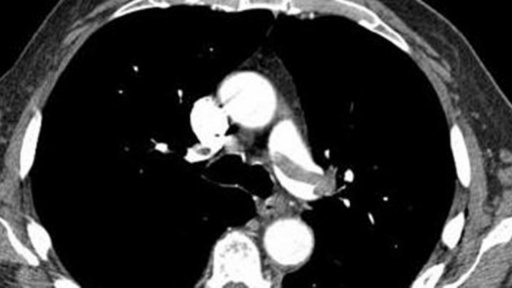
That’s already happening when it comes to lung cancer. Screening and early detection are one of the most important factors in connection with these ugly diseases, however, the current method of lung cancer detection has a 96 percent false-positive rate. Using machine learning for medical imaging, researchers at the University of Pittsburgh and UPMC Hillman Cancer Center have found a way to substantially reduce false positives without missing a single case of cancer. A study from Google and Northwestern Medicine also showed that an algorithm was able to detect malignant lung nodules on low-dose chest computed tomography (LDCT) scans on par with or even better than radiologists, demonstrating how A.I. could enhance the accuracy of early lung cancer diagnosis in the future. In another, European research, an algorithm for pattern recognition outperformed pulmonologists in the interpretation of PFTs. Plus, in yet another study, researchers created a machine learning algorithm to predict a patient’s risk for pulmonary embolism and may help improve the use of CT imaging for the condition.
Looking at all these studies, some might arrive at the conclusion that smart algorithms are not yet being used in clinical settings. But that’s not the case: GE Healthcare’s Critical Care Suite has recently got FDA-clearance and is ready to get into as many hospitals as demand requires. The algorithm automatically processes chest scans right on the X-ray machine and flags those where it detects potential signs of pneumothorax. The attending radiologist immediately gets a copy of the scan via the hospital’s PACS system and the technologist performing the scan is alerted as well, to help make sure that the patient is triaged properly.
In addition, companies such as Fluidda have been developing artificial intelligence tools to combine high-resolution CT scans with advanced Computational Fluid Dynamics (CFD) tools to help pulmonologists visualize both structural and functional parameters of the lungs, which can also aid the diagnostic process. Another example is the excellent smartphone app, ResApp, from Australia, which provides a reliable diagnostic test for respiratory diseases.
Smart inhalers and spirometers to avoid potential triggers
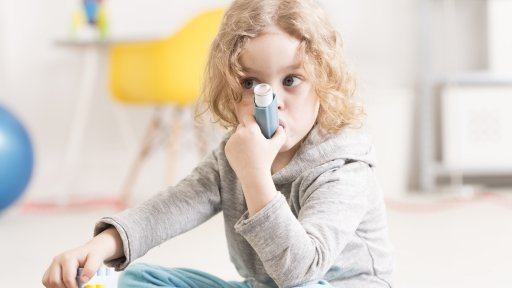
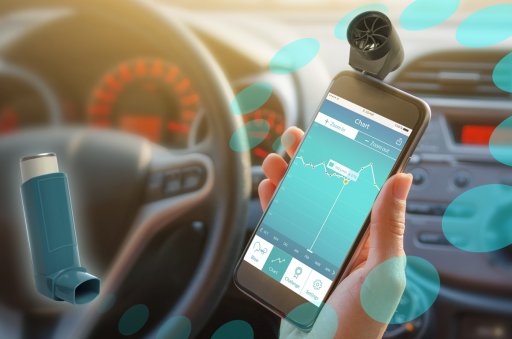
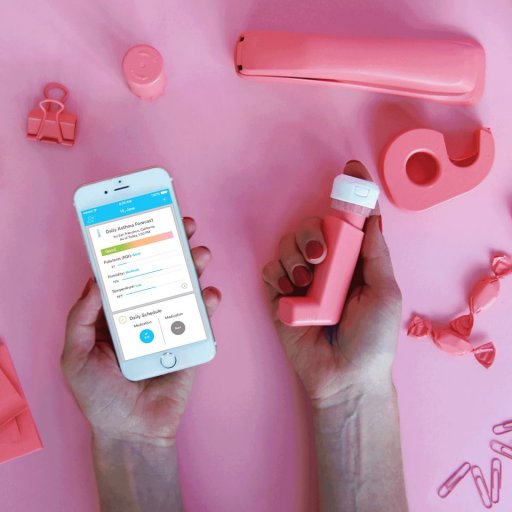
The development of health sensors, connected devices, and wearables could also help in the diagnostics and (self-)management of respiratory diseases. The development and routine use of smart inhalers that could passively collect data and transmit it to a patient’s GP, or store it in a mobile phone for future use would enable symptoms to be monitored over time. Future inhalers might alert users to potential environmental triggers and, if used widely enough, big data analysis could help researchers answer important questions about asthma and other respiratory disorders that require inhaled drugs, such as COPD. The Propeller Air promises something similar: it’s an open API that uses machine learning from Propeller devices and environmental sources to predict, among others, how asthma may be affected by local environmental conditions.
At the moment, inhalers and inhaler add-ons – digital devices attached to existing inhalers – are designed to measure and assess inhaler technique/quality of inhalation, which can help identify and overcome unintentional poor adherence. The FDA approved the first smart inhaler, Teva’s ProAir Digihaler, at the beginning of 2019. It has a sensor that tracks when it is used in real-time and syncs this data to a mobile app. The ProAir Digihaler can determine how well the patient uses it, as the sensor measures a breath actuation and sees how well a patient inhales, giving them a rating.
During the management of asthma, the measurement of lung capacity to monitor breathing irregularities through peak flow meters is necessary. A company called Health Care Originals introduced a wearable device called ADAMM to measure cough rate, respiration patterns, heartbeat, temperature, and other body data. By comparing collected data in real-time with normal indicators, the device warns the user and/or their physician if any of the parameters go above usual. Additionally, it reminds patients to take their medication and ensures that they use their inhalers regularly. In addition, Smart Peak Flow offers a small, pocket-sized add-on to every smartphone that allows users to track their peak flow on their phones. The data can be shared with the pulmonologist, thus making it easier to discuss the management of asthma. Poland-based AioCare developed the Swiss army knife for respiratory conditions: a gadget with a mini spirometer, measuring peak flow and heart rate among others. We tested these two extensively here.
Digital solutions to aid adherence
As already touched upon before, poor adherence to the treatment of respiratory conditions mainly goes down to inhalers – as the delivery of respiratory medication is primarily achieved through these devices. As that involves several steps, and patients must use inhalers in an appropriate way, the result is that 50 percent of patients with respiratory conditions fail to take their daily medication as prescribed. Studies confirmed that the level of adhesion to the prescribed medications is very low and this has a negative influence on outcomes.
Monitoring the correctness of the drug delivery technique, as well as tracking whether the patient is adhering to the prescribed regimen are vital to improving the effectiveness of respiratory care pathways. Digital health companies recognized the potential to help patients through surveillance technologies here. For example, already mentioned Propeller Health, Cohero Health, or Amiko all created technologies, such as smart inhalers, to track patient adherence, delivery techniques and report it back to the physician. At the same time, the myCOPD app – recommended by the NHS – helps people with the condition to perfect their inhaler technique, improve breathing, reduce exacerbations, or track medication.
Smart clothing and stickers for easy breathing
Moving beyond plain algorithmic and sensory solutions, the future of pulmonology also contains some pretty sci-fi style innovations. A team of researchers at the University of California experimented with a sticker asthmatics can wear on their skin, which could warn when an attack is looming. When worn on the abdomen, sensors in the sticker measure the strain being put on a user’s rib cage. Within a couple of years, a similar patch could connect to the user’s smartphone and urge them to seek help – almost like a digital tattoo.
In the future, other connected sensors placed into clothing measuring exhaled nitric oxide fraction, physical activity, or ambient pollution could also monitor physiological parameters related to respiratory conditions. In February 2019, Samsung’s approved patents suggested that the South Korean tech giant might be looking to develop a smart shirt that can monitor lung activity. The sensor-embedded shirt connects to the user’s smartphone to diagnose asthma, pneumonia, bronchitis, and COPD. Some experts believe the next step would be the incorporation of sensors into clothing which could tell whether you are being exposed to too many chemicals or too much smoke in the environment and are at risk of an asthma attack or respiratory disease. The Spire and the Vitali Smart Bra, for example, are wearable devices that measure the user’s activity and breathing by motion sensors. Although the manufacturers do not fully disclose the measurement principle, such systems can analyze breathing patterns in terms of breathing frequency and waveform, providing biofeedback to the user.
Developers didn’t forget about babies either. The MonBaby is a clip-on device that snaps onto a child’s clothing and provides breathing, movement and sleeping position data to a smartphone. Measurements of the sensor are performed in real-time and transmitted to a smartphone app, which displays the results.

|
At The Medical Futurist, we are building a community for making a bold vision about the future of healthcare reality today. If you’d like to support this mission, we invite you to join The Medical Futurist Patreon Community. A community of empowered patients, future-oriented healthcare professionals, concerned health policymakers, sensible health tech developers, and enthusiastic medical students. If there were ever a time to join us, it is now. Every contribution, however big or small, powers our research and sustains our future. Click here to support The Medical Futurist from as little as $3 – it only takes a minute. Thank you. |