What You Can Learn From Your Gut: The Atlas Biomed Microbiome Test Review
How well do you know your gut? Are you aware of how microbiomes are your greatest protectors against diseases? Or how these tiny organisms are affected by every new diet that you undertake? Companies, such as Atlas Biomed, offer a genetic analysis of gut microbiome followed by personalized food recommendations so that anyone can adjust their nutritional habits according to their DNA. It’s a bold pledge, but let’s see how did the microbiome test fair in the second part of our Atlas Biomed review.

9 min | · Updated
|
THIS ARTICLE HAS NOT BEEN UPDATED SINCE 2019. THE INFORMATION SHARED IN THE ARTICLE WAS ACCURATE AT THE TIME OF ITS PUBLICATION, BUT IT MAY BE OUT OF DATE NOW. BROWSE OUR LATEST ARTICLES HERE |
How well do you know your gut? Are you aware of how microbiomes are your greatest protectors against diseases? Or how these tiny organisms are affected by every new diet that you undertake? Companies, such as Atlas Biomed, offer a genetic analysis of gut microbiome followed by personalized food recommendations so that anyone can adjust their nutritional habits according to their DNA. It’s a bold pledge, but let’s see how did the microbiome test fair in the second part of our Atlas Biomed review.
Listen to your gut bacteria
The tiny microorganisms that are living in our stomach make up an entire universe – with remarkable weight and unique “identity”. People carry about three pounds of bacteria in their intestines. In addition, everyone’s individual microbiome, which is the collection of genes within these microorganisms, is as unique as their fingerprint and comprised of hundreds of different types of bacteria. In addition, the actual number of the microorganisms is continuously changing: it varies throughout the day or according to what humans eat.
Experts are saying that the microbiome acts like an organ itself, and it’s central to the body’s operations. It affects aging, digestion, the immune system, cognitive functions – and even mood. A study from UCLA found that gut bacteria might influence mood and brain function. Moreover, another study published in Nature Communications found a clear link between gut microbiota and the triggering of the behavioral signs of stress.
Lately, the option to get your microbiome sequenced and the results used for making better lifestyle choices became available as a service at an increasing number of companies. I had the chance to test the offerings of the very first, lately scandal-ridden and then bankrupt start-up, Ubiome, and also reviewed the Thryve microbiome test. Thus, when Atlas Biomed contacted me with their proposal, the concept of gut microbiome testing wasn’t unfamiliar for me, but I was excited to get to know even more about the secrets of my gut.
Microbiome stories
Atlas Biomed actually offered me two tests: a genetic and a gut microbiome test (and I already reviewed the genetic test here). The London-based company, established in 2016, uses technology from Illumina for molecular analysis and conducts the genetic testing in a Dutch laboratory. Regarding microbiome, they look at the types of bacteria present and their proportion in the overall microbiome. They promise to provide you information about the various functions of your gut bacteria, like the extent to which they protect you against certain diseases and inflammation, as well as what vitamins they synthesize. In addition, you can get weekly recommendations to improve and maintain the balance of your microbiome by adding specific foods to your diet.
As Atlas Biomed’s promises seemed too good to be true at first, I accepted the challenge and sent back both my genetic and gut microbiome test for analysis. Here, I show you the results of my microbiome test.

The sampling process and waiting
Similarly to the genetic testing procedure, the entire journey starts with the sampling process, continues with weeks of waiting and ends with the interpretation of the results – with a microbiome counselor if necessary. It also means a longer adventure, but the knowledge about your inner secrets could make up for it.
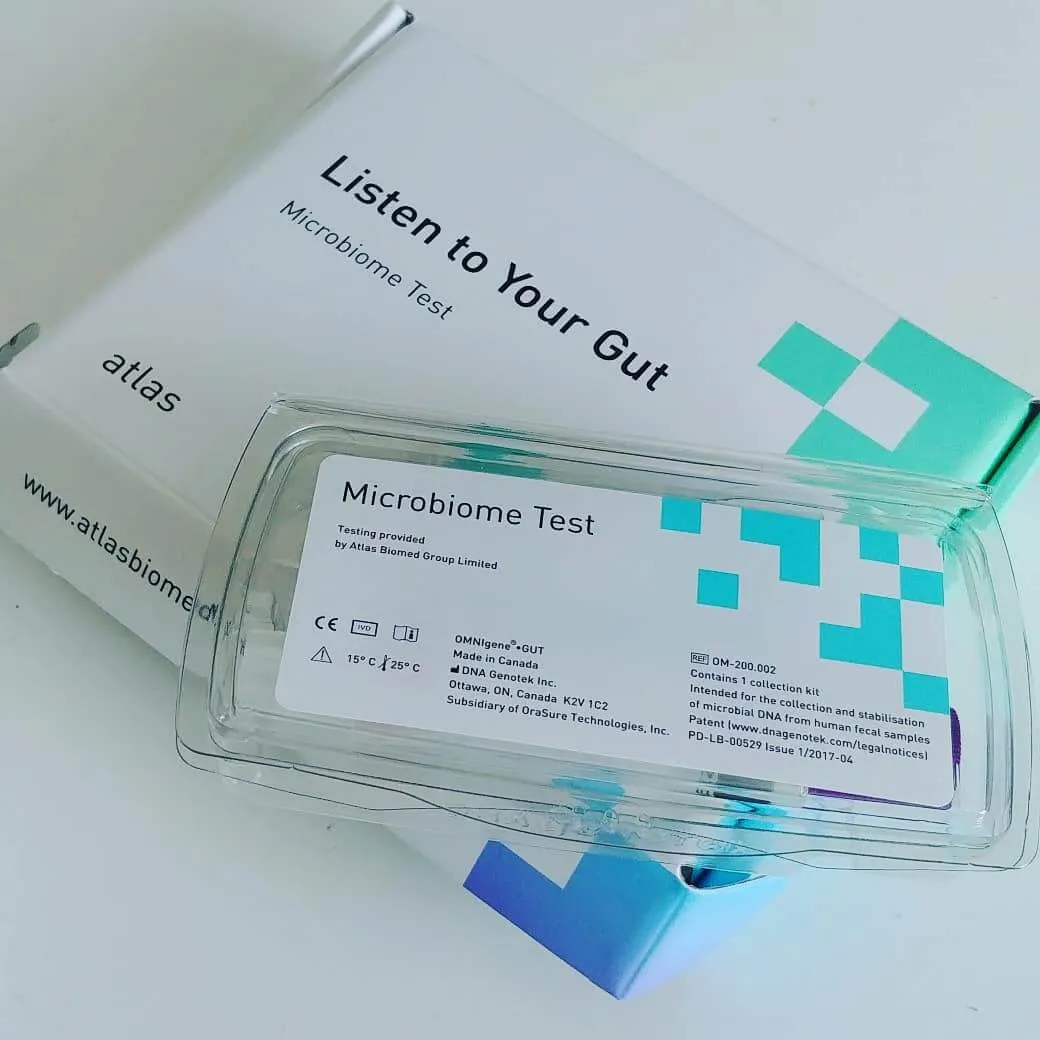
So, the sampling process for microbiome testing has a fairly similar, almost standard procedure already – just as genetic testing does. It involves a small fecal sample and a container to send it back to the given company for analysis. To be honest, it’s not the most convenient testing procedure, but fortunately, with Atlas Biomed, I only had to put a very small sample in a tube with a metal ball. I had to shake it together, return it to the team, and wait for the results.
As with the genetic test, I had to wait four weeks for the outcome to pop up on my Atlas Biomed personal account. In the meantime, they sent me a survey to assess my general lifestyle habits and to get to know me better. I had to respond to questions about my height, weight, my workout plan, my diet, whether I smoke, and what is my pooping routine. So, they tried to obtain every piece of detail about my lifestyle that cannot be mined from a genetic or a microbiome test. I also checked what kind of reports I could expect, and I was happy to get familiarized with the personal account where I could anticipate a very detailed microbiome report.
Click on the image to see it in high resolution
A nutrition wizard for your service
The report is available via a nicely designed, transparent and very user-friendly online dashboard. Honestly, it is the most receptible and understandable report that I’ve seen so far. The user can choose between fairly understandable menu items: Insights, Health, Nutrition, Sports, Personal traits, and Ancestry.
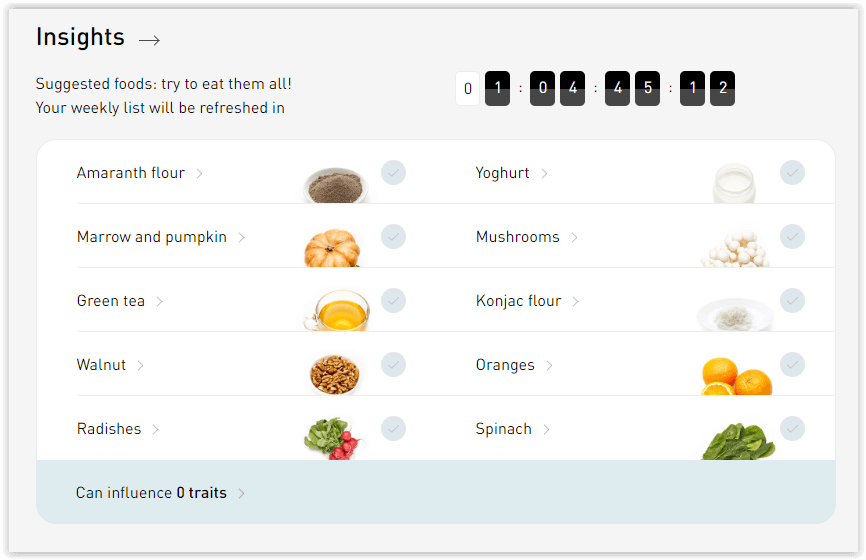
One of the most exciting is the ‘Insights’ part of the personal account, as Atlas Biomed summarizes here everything you need to know and what you should know and do in order to keep yourself healthy. For example, they tell you to avoid high-intensity exercise or to strengthen your abdomen. You also receive a weekly list of recommendations about the food items that are beneficial for you. That’s the most beneficial and practical outcome of the microbiome test: as if you had a DNA-based nutrition coach in your pocket. Every week, you receive a list of food items you should consume based on your results – no matter whether it’s spinach, radish, or pumpkin – and you can even indicate if you included these in your diet.
Click on the image to see it in high resolution
The Western gourmand with sensitivity to coriander leaves
As you would assume, the most significant outcomes regarding the microbiome test are in the Nutrition category. Atlas Biomed provides genetic analysis for the metabolism of dozens of vitamins, they discern various enzyme activities based on the genetic background and estimate what vitamin deficiencies could result from that.
For example, it turned out that I should take much more A and E vitamin, and also iron than what I have known about. It also emerged that there is a reason why coriander is my all-time favorite spice because I’m sensitive to coriander leaves. I also got to know that I don’t have any lactose, gluten, or alcohol intolerance (well, as a Central European I sort of sensed the latter), and I cannot take in bitter flavors. The report detailed that I process caffeine in a slower than usual manner – and that’s the explanation of why I should drink coffee before a work session and not during a meeting.
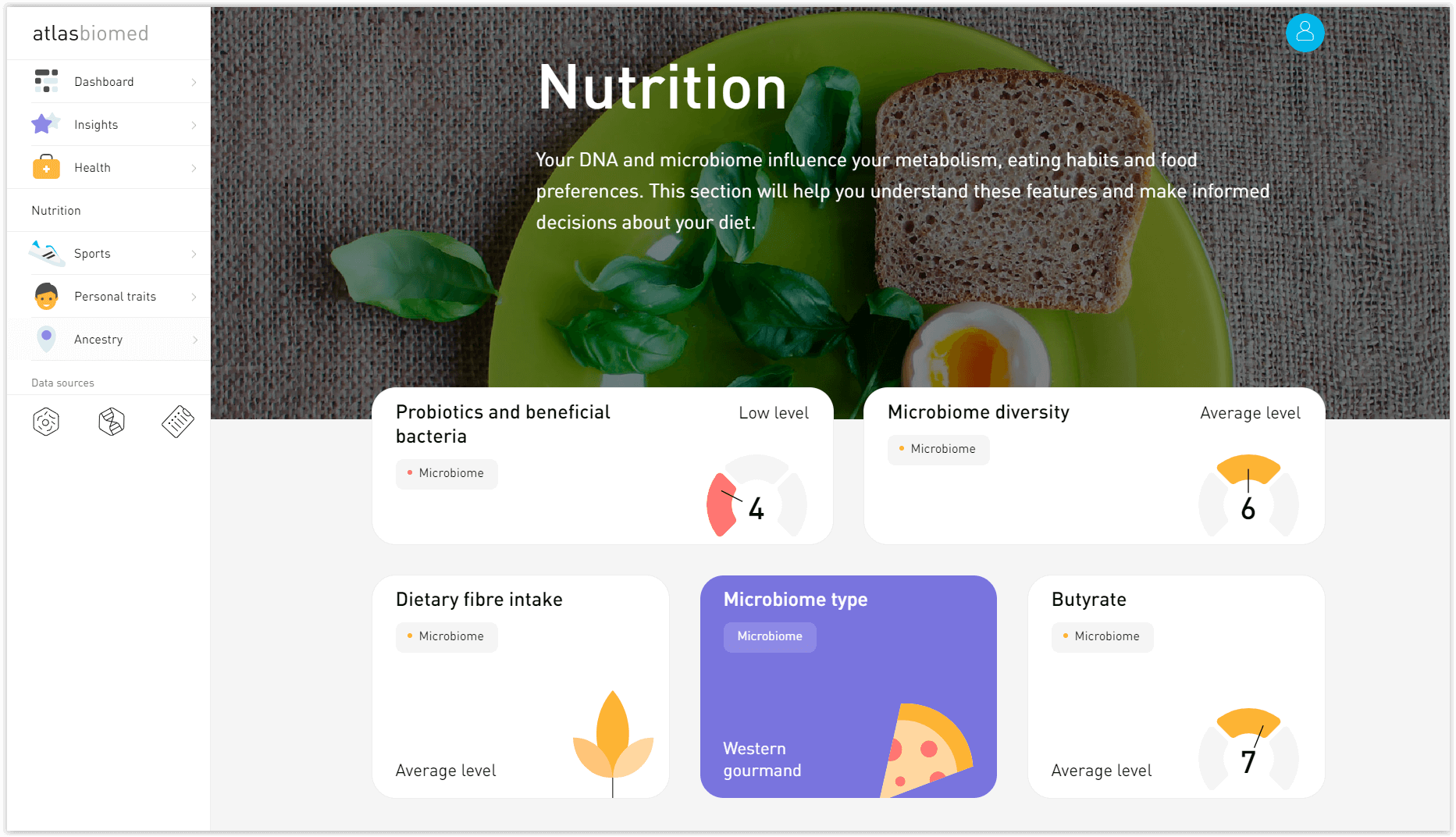
The company also analyses the level of probiotics in your gut microbiome – you can even read about each and every one of them in your account. For me, it turned out that I have too few useful bacteria in my gut, my microbiome diversity, as well as my fiber intake, are average and I can also tell the same about my butyrate level. The latter is a short-chain fatty acid and a byproduct of fiber digestion. If butyrate levels are too low due to inadequate fiber intake, the body produces an inflammatory reaction.
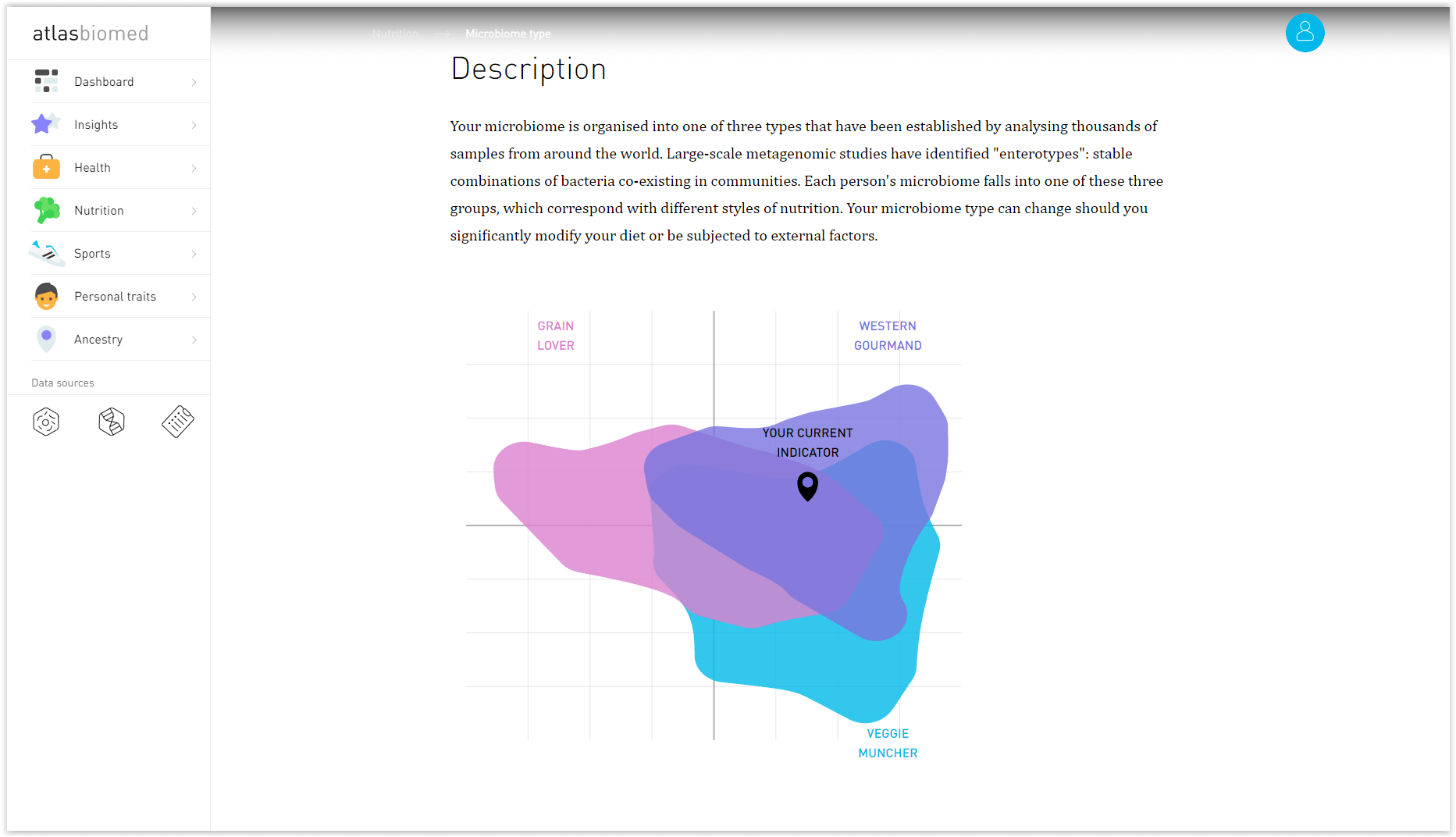
Another interesting and useful piece of information is that Atlas Biomed categorizes microbiome into three types corresponding with different styles of nutrition: the Western gourmand, the grain lover, and the veggie muncher. The categories seem to be pretty straightforward, and I wasn’t surprised that I ended up in the first category. When I asked the company’s microbiome counselor, he commented on my results that I’m actually a victim of Western culture. On the other hand, he also suggested dietary changes in case I would get pregnant – thus I’m not sure I will take the advice of the counselor at face value.
Genetics and microbiome intertwined
Finally, I have to note that while Atlas Biomed’s genetic and microbiome test can be ordered, interpreted, and used for lifestyle change separately as well, the results greatly support and complement each other. The team takes into account the impact of the microbiome for many risks for hereditary conditions and vitamin levels – and they indicate the various results on the appropriate part of the dashboard.
For example, when looking at the risks for obesity, Atlas Biomed found that I would have a risk for that based on my DNA, while an average risk for becoming overweight based on my microbiome and low-risk based on my lifestyle, so that’s how I ended up with an average risk for gaining too much weight. For me, that also means that leading an active lifestyle, going out for runs, and having a healthy diet pay off.
All-in-all, I received the most detailed microbiome test from Atlas Biomed that I have ever seen, and I appreciate the practical dietary advice that I receive every week – with a new list of ingredients to consider. In addition, as I also mentioned in the genetic test review, I appreciate the dashboard and report, and I truly believe they are one of the most user-friendly presentations of data that I’ve ever seen. On the other hand, I wasn’t particularly satisfied with the microbiome counselor who tried to give me advice regarding my potential pregnancy. Putting that aside, I modified my dietary habits according to the pieces of advice I received, and I will definitely retake the test some months later. I’m curious to see whether they will discover any change – and of course, I will keep you posted.
Click on the image to see it in high resolution!
|
At The Medical Futurist, we are building a community for making a bold vision about the future of healthcare reality today. If you’d like to support this mission, we invite you to join The Medical Futurist Patreon Community. A community of empowered patients, future-oriented healthcare professionals, concerned health policymakers, sensible health tech developers, and enthusiastic medical students. If there were ever a time to join us, it is now. Every contribution, however big or small, powers our research and sustains our future. Click here to support The Medical Futurist from as little as $3 – it only takes a minute. Thank you. |