With Rugby, Ballet, And Astrobiology On The Road To Mars
When she was five years old, she looked at the starry night sky and decided right away to become an astronaut. After digesting dozens of science fiction books, she wanted to shoot for astro-navigator but settled to „just” go to Mars as a life goal some years later. She estimates that if she achieves being the best of the bests in astrobiology or planetary science, plays rugby, and dances ballet tenaciously, within 10-20 years, she will board a spaceship to the Red Planet.

24 min | · Updated
|
THIS ARTICLE HAS NOT BEEN UPDATED SINCE 2019. THE INFORMATION SHARED IN THE ARTICLE WAS ACCURATE AT THE TIME OF ITS PUBLICATION, BUT IT MAY BE OUT OF DATE NOW. BROWSE OUR LATEST ARTICLES HERE |
- Why would anyone want to go to Mars?
- What is the story behind your dream?
- What can you do more to become an astronaut?
- What skills should astronauts have?
- The medical challenges in space
- Genome sequencing and space medicine
- Technologies to bring on board of a spaceship
- The first colonies on Mars
- A nightmare scenario about space travel
- A bright vision of the future
When she was five years old, she looked at the starry night sky and decided right away to become an astronaut. After digesting dozens of science fiction books, she wanted to shoot for astro-navigator but settled to „just” go to Mars as a life goal some years later. She estimates that if she achieves being the best of the bests in astrobiology or planetary science, plays rugby, and dances ballet tenaciously, within 10-20 years, she will board a spaceship to the Red Planet. We had an enlightening conversation with an aspiring astronaut, Abigail Harrison alias Astronaut Abby about preparing for the first Mars mission, about nightmare scenarios, and why she is so fond of Stargate.
Abby, you have one of the coolest Twitter bios ever: goal=1st to Mars. It’s impossible to say something bigger than that in so few words. As a keynote speaker, I have a narrative about why healthcare needs a trip to Mars and I describe what it would feel like to go through a medical condition on Mars. I use this metaphor to show what exactly patients back on Earth today in hospitals go through, what feelings they have, and what challenges they have to face because those might be quite similar to what astronauts have to face today. And you can imagine how many people freak out by just showing them the perspective that they would feel isolated and alone in a faraway planet. Everyone they love is back at home, everything is different. And the first question I usually get is why would anyone want to go to Mars if it’s like that?
I know that it is such an incredibly challenging goal and something that stretches the limits of what we are capable of as individuals but even more so collectively as humanity. And that right there, the very thing that makes us look at it and shake our heads and say why would anyone want to go is the reason that we want to do that. It’s because it forces us to step outside of our own boundaries. Going to Mars will cause us to really take huge steps as a culture and as a society.
Every field will be impacted by it whether it’s the way we culturally view science, the way that we look at our dreams, or even just science itself. We always have this in space exploration but the more difficult the space exploration that we’re participating in, the greater the return is that we see from it in terms of science or technology that comes back and helps improve our lives here on Earth. So by placing ourselves in these hostile and absolutely not life-friendly circumstances, we challenge ourselves to solve these problems. And that comes back to improve everything on Earth, gets directly translated into all parts of our life, our technology, our medicine, everything really. And so for us, going to Mars has to be the next step that we push ourselves to do if we want to continue to see these types of returns and even greater ones from space exploration.
I agree with you on this, and I believe that our job is to keep expanding the bubble of scientific knowledge and to use the scientific method to keep on discovering. In a recent interview, I was asked about the vision of my own future, and I said that I wanted to see myself at the age of one hundred being relatively healthy and boarding a spaceship to Mars. I’m not as brave as you, I don’t want to be the first one, I want to get there when it’s relatively safe, and it’s like a touristic trip. But when was the first time that the idea of going to Mars first came to you?
That’s a great anecdote and I hope you make it when you’re 100. I think it’s absolutely incredible that in 2019 we live in a time where space tourism to Mars is something that we can seriously consider. And just thinking about the fact that we’re growing up in a time where we can think about any such a realistic way about going to the Moon or to Mars blow my mind. It seems like it should be science fiction but it’s not.
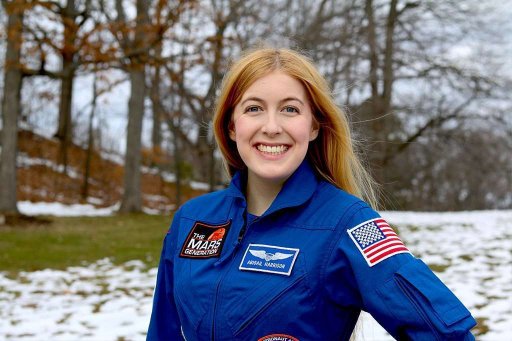
So I first decided that I wanted to be an astronaut when I was about five years old. It’s one of my earliest memories. One scene that I remember very clearly from my childhood is standing outside, in the middle of winter, when the air was super crisp and clear, looking up at the night sky. I had so much wonder and curiosity flowing through me, not really knowing anything about science. I was four or five years old but seeing these stars and thinking about how expansive that had to be, and how much was out there still to be learned and discovered, it was at that moment that I decided that I wanted to be part of that discovery and that I wanted to go to space.
That said, I still was a kid, and so I based my dreams on becoming an astronaut for the first couple of years on a set of science fiction books. I used to tell people that I wanted to be an astro-navigator because that’s the term used a lot in science fiction books. Eventually, I was told that we don’t have astro-navigators yet because we don’t travel between stars but that I could settle for being an astronaut. So I reluctantly agreed on that. I just didn’t decide that I wanted to go to Mars until a couple of years later when I was probably around 9 years old.
And just after having learned more about space exploration, the past of space discovery, and what we are currently doing with the International Space Station, everything that I heard, learned, and read pointed towards the next big step that we needed to take: going to Mars. This would really unlock the rest of our solar system, it would teach us how to be Earth-independent. It would be the first time on a mission that would be so far away from Earth that we wouldn’t be able to rely either on information or on actual physical help if something went wrong. So, you would learn how to get that far, to create these missions, but after humanity achieves that what really is the limit? We can go anywhere in our solar system once we figure out how to stay alive on Mars without assistance from Earth. And so when I learned about these things, about over 10 years ago, that’s when I started dreaming about Mars and I haven’t stopped ever since.
And you do quite a lot of things to achieve that. You pursue astrobiology, you became a pilot, you launched The Mars Generation. I’m pretty sure every major space organization knows your name by now. What more can you do to achieve the dream?
Oh, I’m hardly there. I have a long way to go before I’m going to be eligible or a competitive candidate to become an astronaut. I have done things in the past as you mentioned. I just recently got my pilot’s license. I’m graduating in a couple of weeks with my undergraduate degree. I also speak Russian and Mandarin to an extent, I scuba dive, which is important for astronauts, and I founded a non-profit as you mentioned.
But when it comes down to it, one of the most important things for astronauts is really to have an extremely well-rounded education. And I’m just at the beginning of the path of what’s going to be a very long next couple of years. After I graduate in May, I’ll be taking a year off. Then I’ll hopefully be going into a graduate program to do a Ph.D. in astrobiology or planetary science. After you work yourself up in your field until you are the best of the bests, then you can truly apply to become an astronaut and believe that you deserve to get that really coveted spot.
There are very few positions open. It’s one of the most difficult to obtain jobs in the world just based on the number of people who apply versus how many positions are actually open at a time. So you have to be the best of the bests in your field. In order to be competitive, you will also need to have additional experience to set you apart from all the other applicants. This could include a pilot’s license, scuba diving experience, language abilities, advanced education, research experience, and many other things. I’m really just starting down the path right now to hopefully become really qualified in the future.
Beyond these achievements, what are the skills you think are required for astronauts participating specifically in Mars missions?
Looking at the future and astronauts going to Mars, they have to be able to work really well with groups. The entire deep space mission will be a representation of humanity as a whole and it will require a lot of collaboration. That’s going to be thousands of people here on Earth working together to make it possible for just a handful of people to go out and to dip their toes into our cosmic ocean essentially.
Being a team player is already a requirement for astronauts, but it’s going to be even more important when we start Mars missions because we’re looking at these long-term, isolated missions where you’re leaving Earth behind, and with that everything that is familiar, and what makes us human. And you’re going for roughly three years out into space with probably six to eight other people in a very small enclosure. So you’re going to have to be able to work well together and have a very stable mental perspective on things.
Another important quality that future astronauts will have to possess but doesn’t really get talked about as often is astronauts’ job as science communicators. They go to space, then come back, and they have this responsibility to share those experiences with the rest of us here on Earth. To make sure that the effort, expenditure and time people have been investing on Earth to help astronauts achieve their goals in space really comes back to benefit the people through both technologies and the inspiration they carry. So they are also educators and science communicators who have to make sure that their message really reaches the next generation.
Ultimately, you’re going to have to also be a jack of all trades for a Mars mission which connects to the first point I mentioned. We’re sending a small group of people out for, roughly three years and that means that everyone has to have more than one job out there. So, everyone is going to have to be able to do basic medicine, to pilot the spacecraft, to do mechanics and basically anything that you could imagine needing to do or hiring someone to do during your life here on Earth.
Now, imagine that you can’t hire anyone new to join your team if you have a need. It has to all happen with just six people. Thus, we’ll arrive at people who really do have expertise in their respective field of study and then also have a broad range of abilities in more mundane areas than we usually think about when we think about space exploration. You don’t want to go to Mars without your space planner. That’s for sure.
When I saw Elon Musk’s publication in New Space about how he envisions the colonization of Mars I was not just surprised, but I was shocked not to find any medical challenges mentioned. So, I wrote a publication for the journal focusing on the medical challenges; how advanced digital technologies can help deal with those challenges; and how those technologies can make astronauts the point of care because, in deep space missions, they won’t be able to rely purely on mission control back on Earth. How do you personally see these medical challenges?
Well, they’re not insurmountable but they are definitely the biggest obstacle facing us right now in Mars missions. When you first start to talk to people about Mars missions who are not part of the space industry, a common reaction is that they think the most difficult part is launch, landing and, in general, transportation to Mars.
But when you think about it we’ve already done all of that. We have been sending rovers to Mars for years, even farther out into our solar system, and we’ve had success in those areas. What makes the whole experiment really difficult are the human factors. We’re just such delicate creatures and space is really hazardous. So, when you pair that together, humans have a rough time in space and there is no way around that. I believe medical concerns and human factors are the areas where we have to learn the most in the upcoming years.
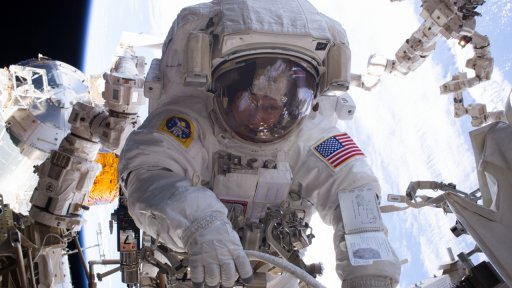
To be more specific, I think that regarding a Mars mission, one of the biggest medical issues will be radiation. Being in space, you get exposed to great amounts and unpredictable types of radiation that needs to be studied carefully. Trying to keep astronauts as safe as possible, to repair some of the damage that’s been done, and to create better shielding mechanisms will be important. That will have a huge impact on Earth as improved treatment of radiation as well.
Another significant issue is your mental health and well-being. Just making sure that psychologically you’re taking care of these astronauts on this long-term mission as well as you can. We can’t yet predict what would happen to people being so removed from everyone else, to not be able to see any part of Earth for those three years, and also to have such a drastic distance between yourself and Earth that it takes 20 minutes to get a message to or from. This will take a huge toll on the mental state of astronauts and so just being able to really carefully monitor and work with that is a health concern that will be of importance in the future.
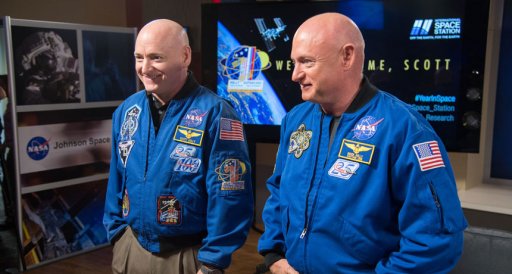
And as it turned out with the release of the twin study that NASA just recently published, there are all kinds of medical concerns, mysteries, and curiosities that have arisen from having someone in space just for a year. So in this twin study, we were able to compare these two twins – one who stayed on Earth and one who went to space for a year – and we learned that we don’t know a lot of what we’re looking at when we think about long-term space travel.
So when we start to think about if that’s what happened over one year, how can we project that out for three years? And that really brings us back to the point that it’s the biggest challenge we have and that over the next decade, it’s going to take a tremendous amount of work from a lot of people around the world to figure out what these challenges are and then to find solutions for them.
Do you specifically do anything, take any precautions right now to prepare for these medical challenges?
Since my goal is to become an astronaut going into long-term space exploration, I do try to just keep up a well-rounded health. I try to stay physically active, I play a lot of sports, for example, I play rugby, dance ballet, I run marathons.
But that said health is something that doesn’t happen overnight. It happens over long periods of time. So, if you want to seriously consider going to space in the future, one of the ways that you can help mitigate some of the issues is to make sure that you’ve been healthy for decades, that you’ve had self-care: you’ve been eating correctly and exercising enough to be the best possible candidate.
In my case, for being able to live the fullest and healthiest life keeping in mind all my health risks, I got my genome sequenced. I also believe that all astronauts will have their genome sequenced before leaving on a deep space mission. Knowing about the risk at least might help in preparation for those. Have you got your genome sequenced?
No, not yet. Genome sequencing is an interesting field right now but I think I take caution with the idea that we should be doing it as individuals and then making big life changes because we just don’t understand as much as we would like to about what these things mean or what the risk factors really look like. I also have a concern about the general public having a lot of fear over things that they found in their sequenced genome or something that’s actually not a problem but seems like it. People don’t quite understand that having a predisposition to something or that having a chance of something genetically doesn’t mean that it’s going to happen. That’s something that concerns me with genome sequencing.
However, for jobs that are as incredibly intense as becoming an astronaut, I think it is something that, like you said, in the future most astronauts if not all will have to have done before they go to space if not for research purposes alone.
Absolutely, it comes with anxiety because you will know about things you didn’t know before or you don’t even want to know about. So, yes it will take a bit of time for us to get accustomed to genome sequencing. Concerning time estimations, when do you think could be the first time when you would have a chance to go on a deep space mission to Mars?
I think that we’re really honestly looking at the mid to late 2030s. Given the issues around human factors, considering the extensive need to have a long-term commitment to deep space exploration from a governmental, political, and economic point of view, we need to have serious long-term commitments in order to make it happen. It’s not a cheap airline flight where we’re gonna just pick up our bags and go tomorrow or five years from now. I really think that it will happen within our lifetime but not for a couple of decades at least.
And keeping that in mind, what kind of technologies would you love to see on board?
I think the idea of being able to produce artificial gravity is something that has a lot of interest. Maybe it’s not quite as on the horizon as going to Mars, so the first missions probably won’t have that but I think that within our lifetime that’s something that bears consideration. That would really get to the root cause of a lot of our problems with deep space travel and would help us to make all of this a lot easier.
Another technology that has a lot of promise and that I’m really excited about is artificial reality and virtual reality. I think we’ll definitely be using these in space travel in the future. These not only have great potential to help astronauts on these long space missions stay connected to humanity, but also allow the maintenance of good mental health.
When do you expect the first colonies to reach Mars, not just the first astronauts? When do you think that will become a reality?
That’s something that we think about a lot: what comes next after the first settlers? Colonies. And that one’s a little bit harder because while I do believe that we will have humans walking on the surface of Mars within the next couple of decades, I think that colonies are a little bit farther out. I wouldn’t want to put a date on it but we’re probably looking at half a century from now. Since first we need to achieve how to put people there, and then we need to learn how to do so for longer periods sustainably and ethically. So to make sure that we’re not placing an extreme burden on the people who are becoming colonists or fundamentally changing or altering Mars itself. I think those are both concerns we have to look at and say we shouldn’t be colonizing until we can answer those two ethical concerns.
And so we’ll have a better understanding of that once we’ve put humans on Mars for the first time. But I think it’s reasonable to look at that as something that could still happen within our lifetime.
And as a science communicator, soon you would start talking to people about what life can be on the Red Planet. What features and lifestyle elements do you think you will tell people about that? What parts of life will be fundamentally different than life on Earth when we have the first colonies on Mars?
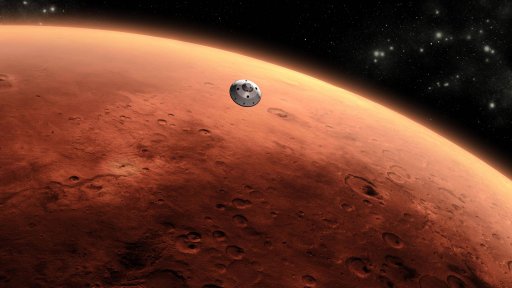
Okay, so when we have the first colonies on Mars, the fundamental difference is the different gravitational experience. Mars has roughly one-third of the gravity that the Earth does. And so you only feel one-third of that gravity on your body, which can be great for people who have skeletal issues, but humans weren’t really designed for that. So we’re gonna have to work out how to live in that kind of situation.
However, for day-to-day life on Mars, that could also give us the potential to do a lot of really interesting things. Can you imagine what it would be like to do track and field events on Mars? To do the high jump? You’d be able to jump so much higher. It’s incredible when you watch videos of astronauts on the Moon and you see the way that they bounce around. Think about having that as your everyday experience as you live on the surface of the Red Planet! It must be incredible!
Sounds amazing! You know, Abby, I’m really doing everything I can to support this mission but what I generally come across from people as feedback is that they are either freaked out about this vision or they don’t want to go, and they don’t understand why it’s important. So I think it’s going to be some of the roles of science communicators to ease this burden on people, to help them understand why it’s important to keep on discovering and beyond. So how do you think we can help humanity prepare properly for becoming a multi-planetary species?
One of the things that we need to be doing right now if we want to be an interplanetary species in the future is increasing our education. We need to make sure that the generations that are growing up after us are scientifically literate. That people will have exposure to quality education and science at a much higher number than we currently have.
That doesn’t mean that everyone needs to go out and become an astronaut or a scientist. But even people who aren’t going to be into STEM fields, science tech engineering, or math should still be literate. They should still have this fundamental notion of STEM fields so that when they hear about things like the Mars missions, they will be able to understand them, process it without fear or concern, and just to have that understanding and knowledge of why they’re important. Each and every one of us as individuals can educate ourselves as much as we can in the STEM fields and then reach out to those around us to see how we can do more.
Absolutely. Concerning education, ideas, and visions, can you please tell us either a science fiction movie or a book that describes a nightmare scenario about this notion of becoming a multi-planetary species?
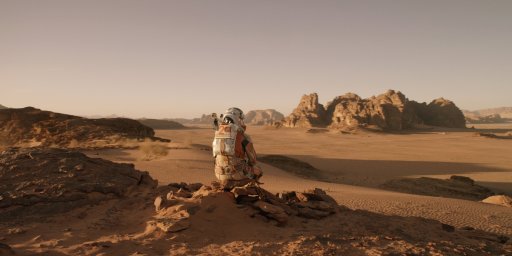
There are so many different nightmare situations. So there’s the independent nightmare situation which we saw happen with The Martian. In that movie, we saw an individual on Mars, who had gotten stranded there. So, we were looking at this idea of losing people in space exploration or in this continued space exploration. The dangers that our first pioneers will face in the near future. And I think that’s a very real consideration to make, something that we have to look at and accept that the danger to individuals as explorers in space is real. We need to do our best, of course, to minimize it but being in space all alone, without help, is an extreme danger that might happen. And that’s why we have our initial pioneers in exploration so that we can make it safer for the masses in the future, so when we do finally get around to making colonies, we’ll be able to make them safe and sustainable for the majority. But that type of a situation with the Martian showed so clearly how things could go wrong.
On a bigger, “humanity” level, there is always, of course, the fear that we’re going to just destroy ourselves, destroy our planet, and everything that we touch. So a science fiction book that I read and really enjoyed that I thought somewhat discussed that was called Seveneves. It was published a couple of years ago and it goes into this idea what happens if humanity moves out into the solar system and then starts to fracture. Will humanity turn on itself? And once we lose our connection with Earth, will we form these factions that fight against one another and just bring about destruction? So, it was definitely looking further into the future and some of those bigger ethical concerns, not really something that we have to worry about right now. Nonetheless, an interesting idea is how do we stay human, how do we stay connected.
Do you perhaps also have an example for a bright vision of the future?
For a positive scenario, I would position the science fiction series called Stargate. This and Stargate Atlantis were two of my very favorite shows when I grew up. I position these as positive examples because they tell a strong, exciting story in a similar way that things like Star Trek did of what it will mean for us to explore elsewhere in the universe.
Stargate holds a special place in my heart because it focuses so much not necessarily on the technology that’s being explored but more on cultures, peoples, and life. This idea of being able to go out into the solar system and look for life that’s not from Earth. As someone who does that on a much smaller scale as a researcher in astrobiology and searching for extraterrestrial or alien life, I love that really grand vision that’s portrayed by the Stargate Universe. Having that ability to go out there and find life somewhere is incredibly exciting. Because I do believe that alien life exists. I think it’s probably going to be a single cellular or microscopic when we first find it but still, it’s out there. And it’s exciting.
It truly is! So, let’s meet on Mars in 2085. I plan to board a spaceship at the age of 100 and we could meet there on the way on the Red Planet.
Perfect I’ll put twenty eighty-five on my calendar.
|
At The Medical Futurist, we are building a community for making a bold vision about the future of healthcare reality today. If you’d like to support this mission, we invite you to join The Medical Futurist Patreon Community. A community of empowered patients, future-oriented healthcare professionals, concerned health policymakers, sensible health tech developers, and enthusiastic medical students. If there were ever a time to join us, it is now. Every contribution, however big or small, powers our research and sustains our future. Click here to support The Medical Futurist from as little as $3 – it only takes a minute. Thank you. |