How Digital Health Technology Can Contribute To Asthma Care
Right before her afternoon run, Rita pairs her smart preventer inhaler with her smartphone and takes two puffs. Checking the companion app, she finds that […]

6 min | · Updated

Right before her afternoon run, Rita pairs her smart preventer inhaler with her smartphone and takes two puffs. Checking the companion app, she finds that she took the right dose and waited for the recommended 30 seconds between inhalations. Relieved that her workout will not trigger her asthma symptoms, she begins tracking it on her smartwatch.
Following the 40 minute run, Rita checks her peak flow reading – or how well she exhales – with her smart, handheld peak flow monitor. This enables her to determine whether her workout caused any narrowing of her airways, which could lead to an asthma flare-up well before symptoms show. The reading she gets is within the normal range, indicating that her preventive corticosteroid puffs helped her stay on track with her fitness goals.
Rita’s fictional example sounds seamless and contemporary, but it is still fictional, while the technologies depicted are contemporary. It is well-documented that asthmatic patients experience difficulties adhering to proper inhaler techniques. Researchers found that among this patient group, nearly half use their inhalers incorrectly. The Asthma UK organisation for its part reports that the inhaler technique of around 1 in 5 patients hasn’t been checked by a GP or an asthma nurse in the last year.
Such inadequate use of their inhaler leads to poor disease control as well as increased associated healthcare costs. If we consider that asthma affects over 25 million people in the U.S. and 5.4 million people in the U.K., where the condition also leads to some 70,000 hospital admissions and 1100 deaths, we can better understand the importance of proper preventive measures.
To control asthma, one needs data and quantifiable feedback about how they are doing; and this is possible through technologies patients can use. As such, asthma is well-suited for a digital health overhaul and here we’ll see how this is the case.
No room for breathing: a field tight on digital health innovation
As a field that deals with respiratory difficulties, research and innovation relevant to asthma similarly suffer from sufficient breathing room. The Asthma UK organisation reports that in the U.K. only 2% of all medical research funding is channelled into studying respiratory diseases like asthma.
In its 2016 Connected Asthma report, the organisation further highlighted the advantages that technologies like smart inhalers, health apps and remote monitoring could bring to address asthma attacks and associated symptoms. In 2020, four years after the report, Asthma UK noted the limited availability of technology in this space.
Studies have shown that asthma management proportionally influences patients’ lives. They link poorly controlled asthma to lower general health-related quality of life, as it affects various aspects from daily activities to sleep quality.
As such, properly controlling the condition can drastically improve patients’ lives. Luckily, there are efforts to bring new technologies to assist asthmatic patients with their ailment.
Renewed breathing space with recent digital health endeavours
“New and emerging technologies, such as smart inhalers that link to personal devices, have the potential to revolutionise the way we diagnose, manage and treat asthma,” said Dr. Kedar Pandya, director for cross-council programmes at Engineering and Physical Sciences Research Council (EPSRC).
To fund such endeavours that bring innovative, patient-centric solutions to asthma care, the EPSRC, along with Asthma UK and a couple of other organisations launched a £3 million fund in late 2020. “We believe technology could play a vital role in this and are excited to see the novel solutions to preventing asthma attacks and improving the lives of people with asthma that are created as a result of this funding,” said Dr. Samantha Walker, director of research and innovation at Asthma UK and British Lung Foundation partnership.

It’s encouraging to see such efforts towards bringing promising technologies in asthma management; more so, when studies are backing their contribution. A recent one conducted by Northwestern University provided asthmatic patients with smart inhalers to use. The latter feature a Bluetooth sensor add-on that detects when patients use their medication and thereby share the data with physicians.
The researchers found that such smart inhalers can help improve medication adherence; as well as better assist asthmatic children in managing their condition.
Inspirational tech
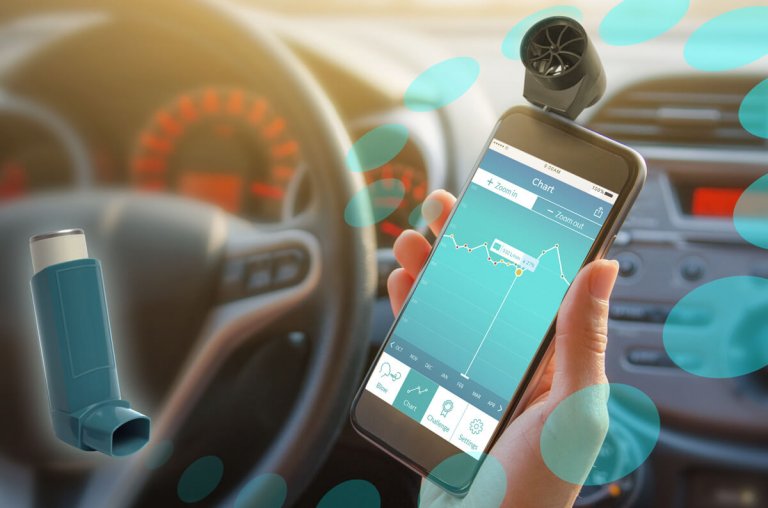
Smart inhalers like the one in the study or as depicted in Rita’s case do exist commercially like the FDA-approved Hallie sensor. It fits a range of existing inhalers and monitors the user’s medication use. It also allows them to share the data with their doctor. A similar alternative is the Propeller sensor. However, there are only a few of such options available for now. However, more are under tests in clinical trials, and have given promising results like the one from the recent study, we could soon see more on the market. Even those suffering from asthma are showing interest in such options. Asthma UK’s own research found that around 9 in 10 asthmatic patients would think of adopting a smart inhaler if the NHS made them available.
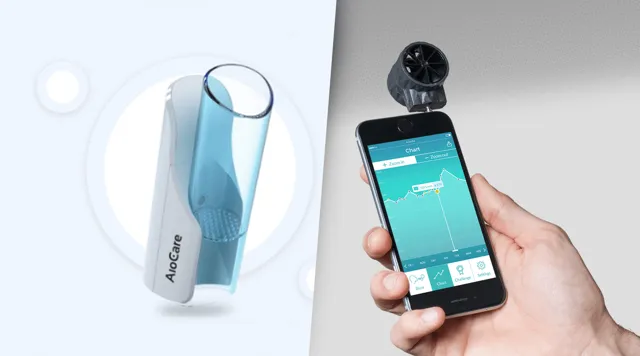
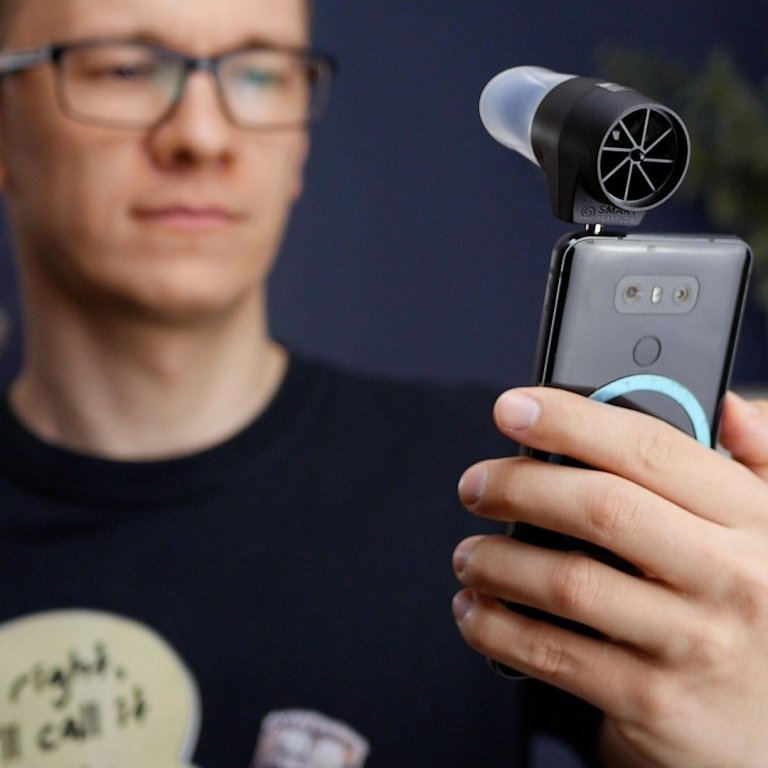
Another solution depicted in the introduction, Rita’s handheld smart peak flow monitor, is also an option right now. We reviewed two such devices before, the Smart PeakFlow and the AioCare. During our tests, we found them both to be accurate, feature-rich and great options for remote monitoring.
A more widely available option is smartphone asthma logging apps. A number of these are available like AsthmaMD and asthmaTrack that enable users to log details about their asthma activity, triggers and medication use, which they can then share with their physician. Others like DailyBreath take into consideration how weather and environmental conditions can influence the user’s condition, and thereby recommend preventive actions.
In the future, those with asthma can expect to have dedicated wearables as an option as well. The ADAMM smart patch is one such wearable that monitors symptoms like cough, respiration rate and presence of wheeze. Whenever these deviate from the individual norm, the wearable vibrates to indicate the user of the deviation; and it even sends a text notification to a designated person. The device is said to be “coming soon”, but we can see its potential for adoption.
Until recently, asthma care was rather lacking in digital health options. But with such options on the horizon, this trend seems to be on track to change for the better. And indeed, asthma care is a field ripe for digital health adoption.
Written by Dr. Bertalan Meskó & Dr. Pranavsingh Dhunnoo
|
At The Medical Futurist, we are building a community for making a bold vision about the future of healthcare reality today. If you’d like to support this mission, we invite you to join The Medical Futurist Patreon Community. A community of empowered patients, future-oriented healthcare professionals, concerned health policymakers, sensible health tech developers, and enthusiastic medical students. If there were ever a time to join us, it is now. Every contribution, however big or small, powers our research and sustains our future. Click here to support The Medical Futurist from as little as $3 – it only takes a minute. Thank you. |