Artificial Blood: Unsolvable Biological Puzzle Or Soon-To-Be Reality?
What is the common denominator for milk, lamb blood, urine, and beer? You would never guess, so we let you off the hook: they were all tried as substitutes for blood during experiments on the quest to find an alternative fluid to replace the elixir of life: human blood. Despite the tremendous efforts, though, artificial blood remains an unsolvable biological puzzle with only a few innovative solutions that give hope that one day it will become a reality.

11 min | · Updated
|
THIS ARTICLE HAS NOT BEEN UPDATED SINCE 2019. THE INFORMATION SHARED IN THE ARTICLE WAS ACCURATE AT THE TIME OF ITS PUBLICATION, BUT IT MAY BE OUT OF DATE NOW. BROWSE OUR LATEST ARTICLES HERE |
What is the common denominator for milk, lamb blood, urine, and beer? You would never guess, so we let you off the hook: they were all tried as substitutes for blood during experiments on the quest to find an alternative fluid to replace the elixir of life: human blood. Despite the tremendous efforts, though, artificial blood remains an unsolvable biological puzzle with only a few innovative solutions that give hope that one day it will become a reality.
An entire bloody business in vein?
Blood has been the symbol of life for millennia – as it is connected so vehemently to good health and well-being. People noticed very early on that blood loss is connected to death. No wonder that in folk tales vampires tried to suck out blood from the living – to somehow continue their life after death. Being one of the most widely and easily available – you prick your finger, and there it is, voilá! – materials as well as one of the most complex ones, blood has been part of the collective imagination as magical, life-giving fluid and as a basic material for healthcare for centuries.
Medical evidence suggests that the Incas of Peru performed blood transfusions already 500 years ago (later turned out that the majority of people in the South American tribe had blood type O that’s why these experiments were successful), although Western medicine only started to experiment with the life-giving elixir after William Harvey first described the circulation of blood in 1616. Up until that point, it only made sense for medieval doctors to get rid of “bad blood” – in the form of bloodletting – to restore the balance of fluids in the human body according to the generally accepted theory of Hippocrates about the four humours. Soon after the discovery of Harvey, all kinds of weird experiments started to unfold to see whether blood could be replaced by – milk, urine, beer, sheep’s blood, saline solutions, or even plant resins. They thought that by doing so, diseases might be cured or entire personalities could be changed.
Unfortunately, the majority of these experiments where medical professionals or charlatans tried to inject another fluid into the veins of unwitting patients ended up in disasters. After the first successful blood transfusions in 1667, the practice was still banned soon afterwards as patients inoculated with sheep or lamb blood died one after the other. For 150 years, the practice of blood transfusions and the search for an alternative bodily fluid was halted – for the better.

Institutionalized bloodthirst: someone needs blood every two seconds
In any case, medical professionals haven’t given up the idea of finding a blood substitute, but they realized there’s a lot more to figure out about this mysterious material before it becomes feasible. With the discovery of human blood groups in the early 1900s, one of the most important bits of medical information ever since, blood transfusions became a lot more feasible than before. In 1907, the first cross-matching took place, which means the examination of the incompatibility of the donor’s and the recipient’s blood type. Ten years after it, the first blood depot was created. In the next two decades, blood transfusion services, as well as blood facilities, were set up, and the practice of blood donation institutionalised.
However, the bloodsheds of the First World War and the Second World War have shown that blood is always in short supply – and that hasn’t changed since the early days of blood donation. According to the estimations of the WHO, about 108 million units of donated blood are collected worldwide yearly; and about 100 blood centers in 168 countries report collecting a total of 83 million blood donations. Although an increase of 10.7 million blood donations from voluntary unpaid donors was reported from 2008 to 2013, we cannot sit back and relax about these numbers, since someone needs blood every two seconds.

Huge demand for artificial blood
And more often than not, it is very difficult to find blood donors. Consider the United States. According to the statistics of the American Red Cross, the number of blood donors in the U.S. is 6.8 million yearly on average. Although an estimated 38 percent of the U.S. population is eligible to donate blood at any given time, less than 10 percent of that eligible population actually do it each year.
That ‘institutionalized blood thirst’ coupled with the realization in the 1980s that HIV and hepatitis can be transmitted through blood transfusions that had been believed to be completely safe up until that point, gave a push for the creation of artificial blood in the last decades. And many entrepreneurs in biotechnology try their best as the realization of that ‘Holy Grail’ would result in heaps of dollar bills. By one estimate, the artificial blood market could be worth $15.6 billion by 2027 if companies could develop products that do everything from carrying oxygen to delivering drugs, and enhancing healing.

Dreams of true blood
However, while you can easily make fake blood for Halloween and dress up as a blood-thirsty vampire, the quest for artificial blood has been going on for centuries – so far in vain. Human blood is an incredibly complex cocktail of proteins, salt, platelets, red and white blood cells perfectly engineered to deliver oxygen and nutrients throughout the body with precision and efficiency. Thus, any fluid that tries to mimic that, should at least have the following characteristics.
First and foremost, it must be safe to use and compatible with the human body. This means that different blood types should not matter when artificial blood is used. It also means that the magical fluid can be processed to remove all disease-causing agents such as viruses and microorganisms.
As a second prerequisite, it must be able to transport oxygen throughout the body and release it where it is needed. That’s the main task of human blood, and as we’ll see that’s also the feature that has proved to be the most imitable.
Third, it must be shelf-stable. One of the most undesirable characteristics of blood is that it can only be stored for a relatively short period of time. For example, as the Red Cross recounts blood cells should be stored in refrigerators at 6 ºC for only up to 42 days, while platelets can be stored at room temperature in agitators only for up to five days. So, unlike donated blood, scientists theorize that artificial blood should at least be able to be stored for over a year or more.

Where do we stand today?
At the present stage of developments, scientists are unable to mimic nature: none of the artificial blood products developed so far possess all the above-mentioned characteristics. As Prof. Robert M. Winslow of the University of California at San Diego, a pioneer in artificial blood research put it, most substitutes that have yet been invented can carry oxygen and carbon dioxide, while coagulation and immune defense, other vital functions of blood, are still out of sight. Therefore, replacement solutions could be more accurately described as oxygen carriers.
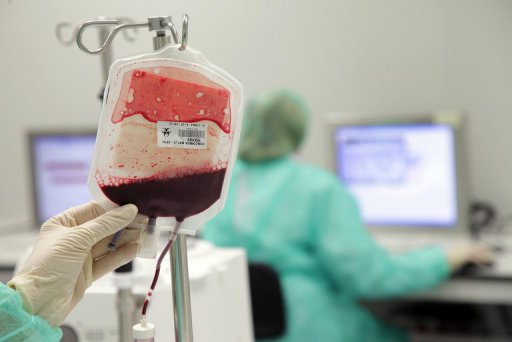
Here, there are two strands of research that stand out: solutions based on hemoglobin and perfluorocarbon (PFC). The most successful strategy has been the pursuit of hemoglobin-based blood substitutes, or HBOCs as they are called, that mimic the oxygen transport functioning of red blood cells by synthetically creating and packaging human or cow hemoglobin.
From Hemopure to freeze-dryable blood
While in the past, there have been dozens of unsuccessful experiments with hemoglobin-based solutions as well – the most famous one was perhaps the story of Hemopure, which was even introduced on the market in South Africa, but which turned out to be significantly increasing the risk of heart attack -, the advancement of nanotechnology, biotechnology, and blood cell biology has given a major drive to innovation.
For example, the team of KaloCyte has created Erythomer, a bagel-shaped artificial red blood cell with a nanometer-sized synthetic packet of purified hemoglobin (taken from expired donated blood) sheathed in a synthetic shell. Unlike regular blood donations, it can be freeze-dried, stored at room temperature for extended periods of time, and injected into any human regardless of blood type.
Other labs have focused on mimicking the clotting function of platelets, crucial for ensuring someone doesn’t bleed out. Materials engineer Erin Lavik’s lab at the University of Maryland is developing a synthetic polymer nanostructure that binds with platelets to help them pile up more quickly. Biotech startup Haima Therapeutics’ platelet substitute, Synthoplate, is currently in pre-clinical animal testing. The company says they expect to begin safety and toxicology evaluations under FDA requirements in 2-3 years – and according to their estimations, they are approximately five years away from commercialization. The same is said about KaloCyte’s product.
In the meantime, and as the latest news around artificial blood experimentation, Japanese researchers from the National Defense Medical College said they have developed artificial blood that can be transfused into patients regardless of their blood type and can vastly improve the chances for survival of seriously injured people. So far, they have proved the material effective on rabbits.

Perfluorocarbon – or rats surviving in fluid
While hemoglobin-based artificial blood has never received approval from the FDA so far, a substitute, which used perfluorocarbons, already reached that stage – although it was pulled out of the market due to technical difficulties of usage.
PFCs are basically biologically inert materials, a group of human-made chemicals composed of carbon and fluorine only, which can dissolve about 50 times more oxygen than blood plasma. They are able to carry oxygen between the lungs and the tissues. Moreover, perfluorocarbon-based liquids can be breathed in, and oxygen movement will unfold between the fluid and the capillaries. As in the movie entitled The Abyss, a rat is put into perfluorocarbon liquid – and it still continues to breathe and, well basically, stay alive. Before you would say that was a Hollywoodian magic trick, a The New York Times article said that was actually carried out on set.
Before these experiments would raise our hopes, PFC-based products are way out of sight now due to two hurdles. First, they are not soluble in water, which means to get them to work, they must be combined with emulsifiers, and second, they have the ability to carry much less oxygen than hemoglobin-based products. This means that significantly more PFC must be used.

As you can see, for now, these examples leave little hope for artificial blood. Unfortunately, blood donations can not be replaced by substitute material for the foreseeable future. At least for the next 5-10 years, there are not such commercially available products that could beat human blood – in saving millions of lives around the globe. Thus, all we can say is until we figure out how to create artificial blood, go and donate as much blood as possible. Remember, someone needs it every two seconds.
|
At The Medical Futurist, we are building a community for making a bold vision about the future of healthcare reality today. If you’d like to support this mission, we invite you to join The Medical Futurist Patreon Community. A community of empowered patients, future-oriented healthcare professionals, concerned health policymakers, sensible health tech developers, and enthusiastic medical students. If there were ever a time to join us, it is now. Every contribution, however big or small, powers our research and sustains our future. Click here to support The Medical Futurist from as little as $3 – it only takes a minute. Thank you. |