Alternate Realities Help Medical Education And Training During COVID-19
With the need to limit physical contact amidst the pandemic, the whole world turned to virtual solutions to reprise their daily activities. Zoom and Slack […]
8 min |
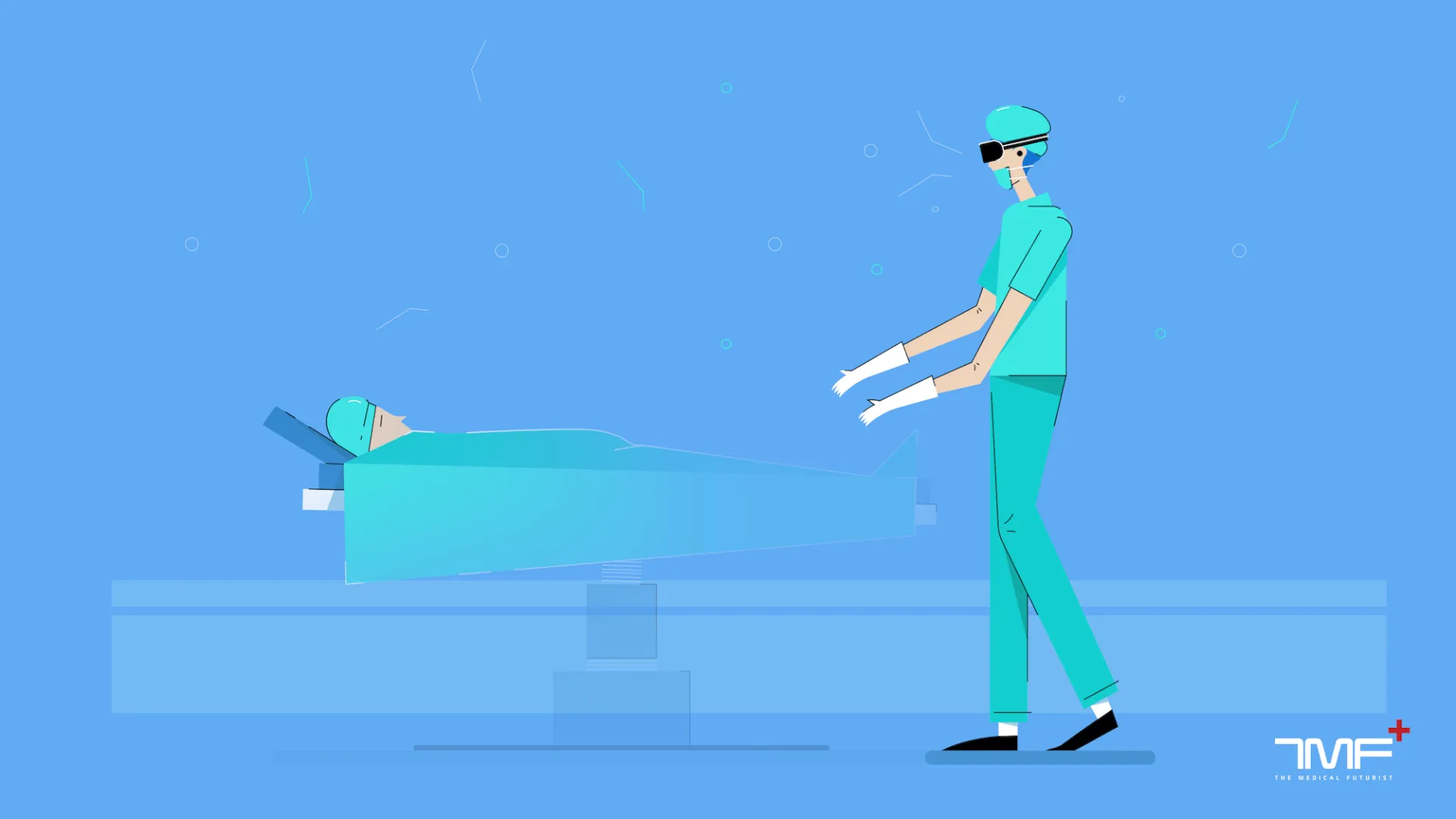
With the need to limit physical contact amidst the pandemic, the whole world turned to virtual solutions to reprise their daily activities. Zoom and Slack became the new workplace; and even medical consultations were increasingly conducted online.
However, by turning indoors, aspiring healthcare professionals were negatively impacted since hands-on practices and training were limited, if not impossible. In Scotland, dental students had to repeat a whole year due to insufficient clinical exposure. In particular, they could not practise aerosol-generating procedures (AGPs) enough. The latter were limited due to their potential to facilitate COVID-19’s spread with airborne droplets created. AGPs are part of a significant portion of dental treatments and without enough practice with those procedures, dental students can’t graduate.
But it’s not only dental students who have been impacted in this way. In Taiwan, a study showed that those in emergency medicine residency training programs saw fewer patients per hour than during pre-pandemic times. This decrease in patient volume subsequently leads to reduced clinical practice for the trainees. Since a physician’s expertise relies on exposure to vast amounts of patient cases, having less physical experience might affect their performance.
So how about taking a page from the “new normal” and replacing that missing physical training with a virtual one? A recent independent study even found promising results when orthopaedics trainees used mixed reality (MR) simulators from VirtaMed to practise. They were 20% faster and caused 30% less cartilage damage than those who trained on cadavers. To what extent could such alternatives really benefit medical training and education in times of a pandemic? Would these prevent students from having to repeat a year altogether?
To contemplate these questions and guide us in these new realities, we sought the insight of Raimundo Sierra, CEO and Founder of VirtaMed.
COVID-19’s impact on medical education and training
Being forced to repeat a year must be tough for the students themselves who, after years of rigorous studies, saw their graduation deferred. But, according to Health Secretary Jeane Freeman, it might be for the best for their professional development. “It is about giving dental students the experience that has been denied them this year because of the pandemic,” Freeman told the BBC. “We need to ensure that people studying dentistry can enter the profession as confident fully-qualified clinicians.”
However, there are two sides of the story. Those dental students are condemning this decision, highlighting that it has led to “insurmountable” financial and mental stress. They are unfairly disadvantaged as AGPs are commonplace in dentistry but not so much in other areas of healthcare. Indeed, a review paper published in the journal Surgeon concluded that digital tools helped medical students and residents build “virtual bridges” with their teachers and supervisors. Case Western University, whose students regularly use the HoloLens MR headset for its anatomy practices, went the extra mile during the pandemic. It equipped its 185 first-year medical students with the $3500 device for remote practices. In a survey, over 80% of those students found that their all-remote anatomy lessons were comparable to or better than in-person sessions.
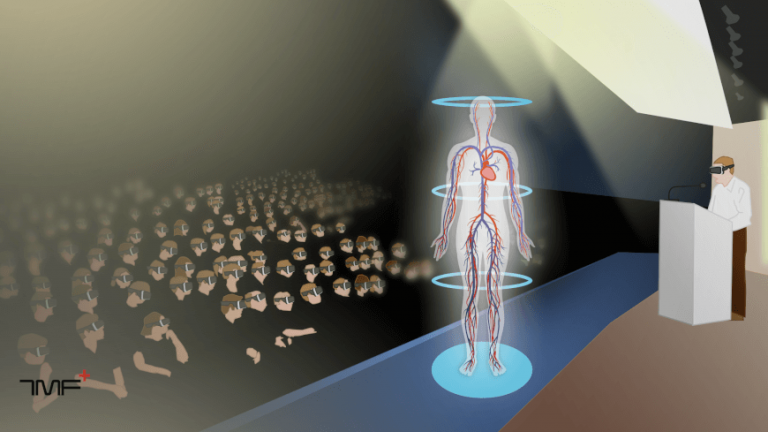
“We know that pilots have to make up for the lack of flying time during the COVID pandemic partially by using simulators; and indeed we know that many hospitals have been able to continue simulator training during this time,” Raimundo Sierra told The Medical Futurist. “Simulation training has strengths in some areas of a curriculum; and can provide objective feedback to demonstrate if skills are being improved, maintained, or degrading due to lack of use.”
So, could such simulators help fill in the lack of practice for medical and dental students?
How virtual solutions can help
In 2019, a Harvard Business Review study analysed the performance of virtual reality (VR)-trained surgeons. They showed a 230% boost in their overall performance when compared to traditionally-trained surgeons. They were also faster and more accurate in performing surgical procedures.
The recent study that used VirtaMed’s simulator also indicated better performance among those who used it. Their simulator involves a form of mixed reality experience rather than a VR one. It combines virtual computer models visible on a screen with haptic interfaces.
“When performing minimally invasive surgery, the surgeon typically looks at a screen; with the patient in front of them and endoscopic cameras and instruments in their hands,” VirtaMed’s CEO explains. “This is exactly the setup that VirtaMed recreates; we combine virtual reality graphics with a replica silicone anatomy and surgical instruments that are packed with sensors to work with our 3D models. For a surgeon this has the same sense of tactile/haptic immersion; combined with the visual immersion on the screen as they would have in the OR.”
Raimundo Sierra tells us that over 1/3 of U.S. orthopedics programs use VirtaMed arthroscopy simulator. Similarly, 8 500 dental students around the world use Image Navigation’s DentSim Simulator. It pairs virtual images with a mannequin on which students perform procedures while receiving immediate feedback as it tracks their movements.
Being trackable and recorded, such simulators provide objective metrics otherwise unobtainable via traditional methods. This enables trainees to better analyse their performance and thereby focus on where they need to improve.
A replacement for traditional methods?
The pandemic severely constrained traditional training methods. Raimundo Sierra even highlights that many countries suspended cadaver training due to the risk of infection. “The primary takeaway is to acknowledge that mixed reality simulation is a comparable alternative to these traditional methods,” Sierra adds.
But he is quick to stress an important point. “This does not mean that training with cadavers or supervised clinical training is redundant! Far from it!” VirtaMed’s founder exclaims. “Rather, this highlights that there is another viable solution on the journey towards the operating room.”
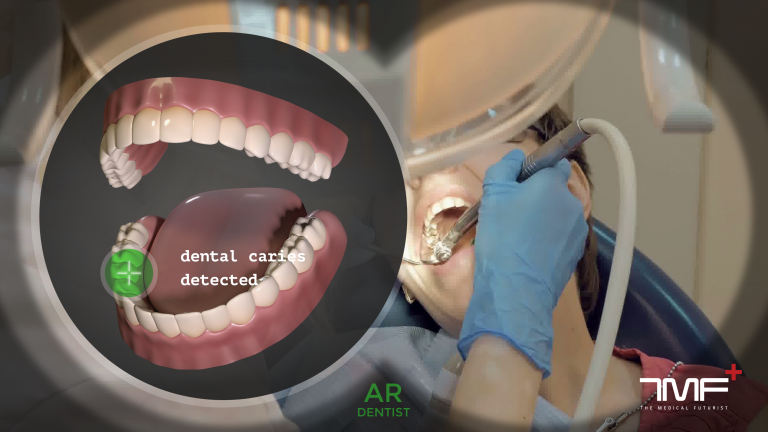
Given the promising, research-backed results of simulators for training, we asked Sierra whether such simulators could help supplement the lack of experience which forced dental students in Scotland to repeat a year. In his reply, VirtaMed’s CEO had a more down-to-earth take. “If graduation is the step towards independent practice in the OR, then students will still need some experience with the additional cognitive load of a real patient in the operating room,” he told us.
As such, even though virtual training methods were shown to be as – if not more – effective as gold standard methods, they are not training solutions but rather tools. They might not be sufficient to help students graduate during a pandemic, but could help them fine-tune their skills until they can interact with live patients again.
|
At The Medical Futurist, we are building a community for making a bold vision about the future of healthcare reality today. Dr. Bertalan Mesko, PhD, the Director of The Medical Futurist Institute, launched The Medical Futurist to help individuals, companies, and governments understand how digital health technologies bring healthcare into the 21st century. “Digital health technologies empower patients to become proactive in their life; empower medical professionals to do their job being supported by advanced technologies, and companies and policymakers to make better decisions about their future.” – Dr. Bertalan Meskó To support this transformation, Dr. Meskó and The Medical Futurist team is working relentlessly analyzing the latest trends in digital health and bringing insights to the 800,000+ readers and followers of our publications, along these principles:
For 2021, we commit to another year of high-impact reporting that helps people navigate the jungle of digital health and to see where it is heading. With no shareholders or billionaire owners, we set our own agenda and provide unbiased insights that are free from commercial and political influence. If you’d like to support this mission, we invite you to join The Medical Futurist Patreon Community. A community of empowered patients, future-oriented healthcare professionals, concerned health policymakers, sensible health tech developers, and enthusiastic medical students. If there were ever a time to join us, it is now. Every contribution, however big or small, powers our research and sustains our future. Click here to support The Medical Futurist from as little as $3 – it only takes a minute. Thank you. |