Alcohol, Smoking, Drugs: How Technology Can Help
The global statistics on substance use are disquieting. Globally, about 3 million people die every year from alcohol abuse. Tobacco kills up to half of […]

9 min | · Updated
The global statistics on substance use are disquieting. Globally, about 3 million people die every year from alcohol abuse. Tobacco kills up to half of its users – over 8 million people annually. And the UN’s 2021 World Drug Report estimated that around 275 million people used drugs worldwide in 2020, while over 36 million people suffered from drug use disorders.
Disruptive technologies could act only as additional tools for managing preventive or reactive treatment for both victims and physicians next to therapy. Alcohol content-measuring wristbands, smart lighters, nicotine tracking wearables, stop smoking apps, virtual reality therapies, automated messaging platforms, and even sobering networking apps are the newest elements in the arsenal of digital health technologies supporting everyone in the fight against addiction.
If you want to know more about the potential role of digital health in the opioid crisis, read our article Digital Health Supports The Fight Against Opioids.
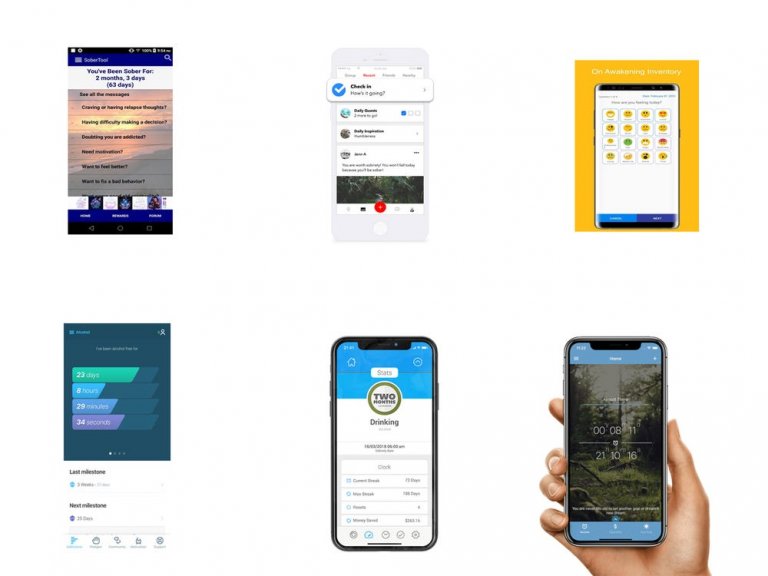
Google Play/Sober Time/Sober Grid/ I Am Sober/Sober Tool/Nomo
Alcohol: responsible for 1 in 20 deaths globally
Alcohol is a powerful drug and it takes too many lives. Various technologies, such as apps, trackers or online programs, aim to prevent excessive alcohol use or treat existing alcohol problems.
As in the majority of substance abuse cases, prevention is of utmost importance. While comprehensive research found that the best thing for our health would be not to consume alcohol at all, moderation methods can already help avoid more severe health-related problems, issues around binge drinking or addiction.
Don’t look back you’re not going that way
Many apps are tracking how much alcohol the user consumed and how their stance is towards liquor. DrinkControl does precisely that, while DrinkCoach additionally offers users (in the UK) the in-app chance to consult with a professional “Drink Coach.” A simple and easy-to-use app, NOMO helps users count the days they’ve been sober. This one’s a simple app using this ease to motivate people – by saying no more. SoberTime offers a built-in community that tracks how long you have been clean and sober; and there are also multiple apps supporting AA’s 12 steps program, like Joe & Charlie or the 12 Steps AA Companion.
The 12 Step Guide – AA is based on the program of Alcoholics Anonymous (AA), and it includes a sobriety calculator. Beyond smartphone applications and wearables, within the framework of a pilot program in Belarus, Brazil, India and Mexico, the UN launched innovative e-portals with self-help intervention tools, among others providing a self-screening tool for hazardous and harmful use of alcohol and a fully computerised self-help programme for people who wish to reduce or stop drinking alcohol.
A wearable called Skyn, which looks like the sort of wristband runners wear to measure their speed and heartbeat, calculates the body’s alcohol content. Three-quarters of an hour after drinking, the Skyn’s wearer can see their blood alcohol content (BAC) on the wristband. The slim and comfortable ION™ Wearable provides continuous alcohol consumption monitoring. A pilot study using BACtrack Skyn also emphasised the positive value of such wearable alcohol trackers for more objective measures of alcohol use.
However, one of our favourites is Sober Grid. This app connects those in recovery from drug and alcohol addiction and those trying to get sober. Its geolocation-based peer support feature helps users find people in the vicinity they can immediately connect with, thereby reducing relapses. In our exclusive interview on Patreon, Sober Grid’s advisory board member Jason Abate told me how an algorithm filters those cases wherein immediate human intervention would be needed. With over 300,000 registered members in 170 countries, with about 50% of them in long-term recovery, SoberGrid is helping on a large scale.
COVID-19 didn’t make it easier for people living with addictions. According to an OECD report released May 2021, there has been an increase in domestic violence during the pandemic, for which harmful alcohol consumption is a risk factor. However, it seems telemedicine could fill some of the gaps in providing care for those in need. It also seems to last, which is particularly good for people in remote areas or with challenging circumstances.
Tobacco: lives going up in smoke
Despite the overarching campaigns against smoking in numerous (highly developed) countries – bans on smoking in public spaces, restrictions on tobacco advertisements and marketing channels -, the statistics around tobacco-related issues are no less disappointing than in the case of alcohol. One reason is that while the attitude in European countries and the US strongly goes against smoking, tobacco companies are massively advertising in the developing world, especially Africa and Asia – where the numbers of smokers soar.
That’s frustrating on many levels, but primarily because it’s almost common knowledge that smoking increases the risk of death from ischemic heart disease, cancer, stroke, and respiratory diseases.

Source: www.npr.org
Stop smoking apps, smart lighters and co.
Luckily, health tech developers are creative in aiding individuals desperately searching for ways to stop smoking. One of the most popular means is to download an app coaching you to develop a personalised plan for quitting. Popular apps like Craving to Quit or QuitNow! all offer virtual aids in case you want to stop with the fumes. Gamification, support grid and rewards await those trying to quit with these apps.
Initially helping its founder quit smoking, Quitbit lighter is a digital tool that supports the determined. As they write, “if you can measure it, you can manage it” – Quitbit helps track, reduce and, ultimately, quit smoking.
Another company helping smoking cessation, Carrot, has just received an FDA clearance for its digital breath sensor. The breathalyser can detect a user’s exposure to cigarette smoke and compare the carbon monoxide levels in their body to that of a nonsmoker. This is good enough motivation for many users.
The WHO tries to overcome the burdens caused by smoking on a global scale. For this, the organisation “employed” Florence, a 24/7 virtual health worker to provide online counselling, make a quitting plan, and even recommend helplines and support apps.
Craving to Quit is a program successfully helping people quit tobacco. Users can learn exercises to manage cravings, have live video chats with addiction experts, or join the online community support chat with others wanting to quit.
Workit Health helps in the fight against all kinds of addictions, from alcohol and opioids to tobacco, gambling and sex. Its app-based recovery program offers online therapies through telehealth, medication management, counsellor or clinician support and more. They also have a chain of clinics throughout the U.S. providing clinical treatment options as well.
Other recovery digital programs, like Marigold, a chat-based support group therapy software, and DynamiCare, a personalised coaching platform combining smartphone-based remote alcohol, drug and nicotine testing, offer straight-on financial rewards.
Monument, an online alcohol addiction treatment platform, gained more than 12,000 members in its first 2 years. Their specialised, holistic approach “reframes the role of alcohol in your life” and improves mental health.

Digital technology will not leave drug addicts behind
The most painful and destructive substances with the lowest rates of rehabilitation success are hard drugs. Opioids, heroin, cocaine, methamphetamine and the like are incredibly tough to fight. According to the American Addiction Center, in the 50th year of the War On Drugs President Nixon started in the 1970s, drug use peaked in the States. Once again, after the 2019 peak, 2020 marked yet another dark peak in the number of overdoses. But opioid use is a global concern.
Again, disruptive technologies cannot replace medical treatment or psychological guidance here, yet, artificial intelligence, digital maps, smartphone apps or electronic prescriptions can help aid the process. An exciting alternative presents itself with the appearance of virtual reality to avoid the use of prescription painkillers or as a strategy of distraction at the time of craving during the rehabilitation process. Another effort came from the FDA in May 2018: the agency launched an innovation challenge to ramp up efforts to use mHealth and telehealth to combat the nation’s opioid abuse epidemic. The Agency’s FY2022 budget reflects the Administration’s ambition to end the opioid crisis. It includes funding for the “development, evaluation, and marketing authorisation of digital health medical devices.”
‘It always seems impossible until it’s done‘ – Nelson Mandela
Virtual treatment (thus telehealth) options are available at many providers. These apps also offer support groups, virtual guidance and coaching, and may also connect users directly to therapists. Digital health platform Boulder expands access to effective treatment for opiate use; Pear Therapeutics is a provider of software-based digital therapy. Pear is tested in clinical trials, evaluated by the FDA, and prescribed by healthcare providers.
Connection, rewards and peer support are crucial in drug recovery. WeConnect puts this into focus in its application in an attempt to save lives and help with multiple addictions. Another approach is virtual reality (VR) supporting addicts to overcome their cravings. Researchers at Vanderbilt University tested a virtual reality program counteracting negative emotions regarding cravings with promising results.

As cigarettes, alcohol, or drugs promise an easy way out of troubles or just a solution to have a great time – or at least a better one than experienced everyday-life situations, the war on addiction gets tough beyond belief. Coupled with mental health problems, financial troubles or issues in an individual’s environment: it seemed almost impossible to do anything.
Digital health technologies might represent just one tool in an arsenal of necessary support. But they could prove to be a useful tool in the hands of the ones who have the willpower, professional help, and a supportive environment to get out of the dark valley of addiction.
|
At The Medical Futurist, we are building a community for making a bold vision about the future of healthcare reality today. If you’d like to support this mission, we invite you to join The Medical Futurist Patreon Community. A community of empowered patients, future-oriented healthcare professionals, concerned health policymakers, sensible health tech developers, and enthusiastic medical students. If there were ever a time to join us, it is now. Every contribution, however big or small, powers our research and sustains our future. Click here to support The Medical Futurist from as little as $3 – it only takes a minute. Thank you. |