A Digital Stethoscope For Your Kids – The StethoMe Review
A home stethoscope backed with A.I. could give parents an ease of mind, save children from an unnecessary trip to the doctor, and assist health care providers make the right call.

8 min | · Updated
|
THIS ARTICLE HAS NOT BEEN UPDATED SINCE 2019. THE INFORMATION SHARED IN THE ARTICLE WAS ACCURATE AT THE TIME OF ITS PUBLICATION, BUT IT MAY BE OUT OF DATE NOW. BROWSE OUR LATEST ARTICLES HERE |
Have you ever been confused and uncertain about a basic thing? Like you know you should know it, and it’s definitely a familiar concept, but you’re still not exactly sure?
For instance, when you see the word Worcestershire sauce written on the menu. You may hope it’s not in the name of the dish you choose to order. Why would anyone name a dish after that condiment and is there anyone on this planet, apart from a few Brits, who are confident to pronounce it?
Right. That’s what your average med student feels when trying to auscultate a patient’s heart and lungs for the first time in their lives. It takes quite a few listens before they’re able to decide if the patient is healthy or not. It takes practice. Not as long as learning to pronounce Worcestershire sauce properly, obviously, but long enough.
StethoMe aims to save you the time and practice needed to become a pro and interpret the data. Because you don’t need to do any of that! You don’t need the years and years of experience a pulmonologist has to interpret the auscultation records. StethoMe tells you all a parent really wants to know: whether your child’s respiratory sounds are healthy or not. And after consulting the doctor you’ll be sure about what to do next.
Because it’s so frustrating for parents to see their child battling an illness and not to know how to help or how serious it is. After all, we just want to do everything we can for them. No wonder there are millions of unnecessary visits to the ER every year. So, an AI-powered stethoscope at one’s home could give peace of mind for parents, and save time for doctors and money for hospitals in the long run.
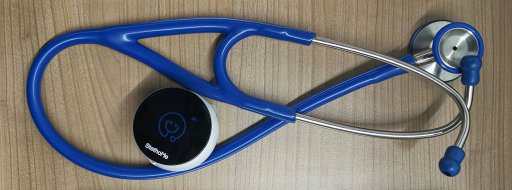
A breath of fresh air
A new and exciting idea in health technology for sure. So, how did they come up with it? And what lies ahead of this company?
“The idea comes from the co-founders of StethoMe – Dr. Honorata Hafke-Dys and Dr. Jędrzej Kociński. Both of them are scientists, but also parents who struggled with their children’s frequent respiratory tract infections. After going through this experience, Honorata and Jędrzej discussed the idea of a home stethoscope that could potentially change the lives of many families around the world.” explained Wojciech Radomski, CEO of Stethome, to Digital Health Age in a recent interview.
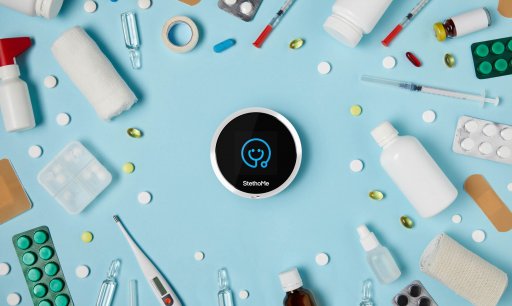
The Poland-based company’s software and device have already received the European CE mark and they’re waiting for FDA approvals to expand to the American continent. The smart stethoscope is aimed at parents with little kids. When there’s a sign of sickness, after a quick auscultation, the A.I. can help parents and doctors work as a team to decide on the next step.
But fear not, fellow adults, we don’t have to feel left out- the company is working on algorithms for identifying respiratory sounds in adults and recognizing heart sounds as well.
Let’s take a closer look
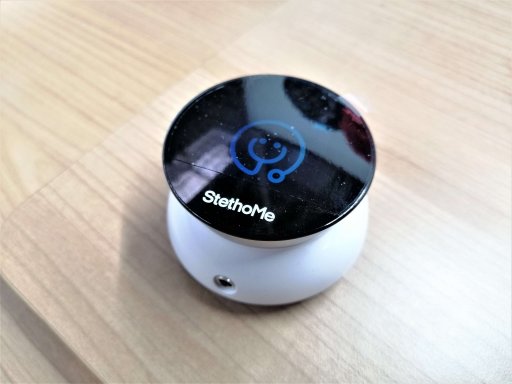
Opening the box, we can find a quick start guide, the stethoscope, and the charger with a cable. We love the design, StethoMe is light, wireless, and minimalistic with a bright display. It’s made out of plastic, yet it doesn’t feel or look cheap. There are no buttons on the device, just a jack socket, so you just shake it gently to wake it up. It’ll re-enter sleep mode automatically when not used. You can tap the display to switch between auscultation modes or to turn it off.
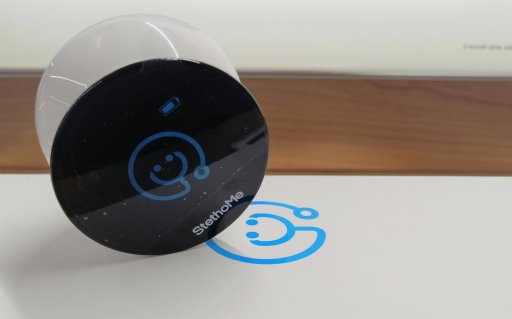
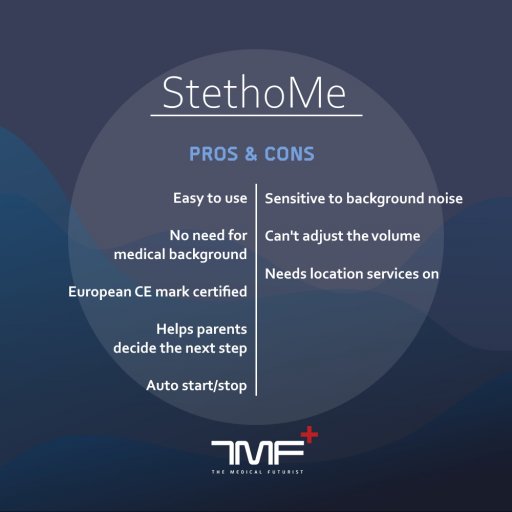
The device works as a regular stethoscope without the app- you only need to plug in your headphones and you’re ready to go. To unlock its full potential, you’ll need to download the app (supports both iOS and Android). With headphones on, it’s quite loud and unfortunately, you can’t adjust the volume.
It’s really easy to set everything up. You’ll have to create an account and accept user permissions for the exciting part to begin. For the app to pair with your stethoscope, you’ll need internet access, Bluetooth connection and location services turned on. We’re not big fans of providing more than necessary data to anyone, so it would be a better user experience if we could choose not to give location permission and still use every aspect of the app.
The most important features of the StethoMe stethoscope include lung and heart examination, keeping record of medical history, artificial intelligence-based analysis and “full flexibility in terms of integration and API for the doctor’s analytical panel”.
Need inspiration?
Just take a deep breath…
Jokes aside, using products like this is inspiring for us. We believe AI plays an important role in the future of medicine, stethoscopes and other medical inventions using neural networks could be as common and a basic part of your medicine cabinet as thermometers today. Let’s see what this device can do to prove our point!
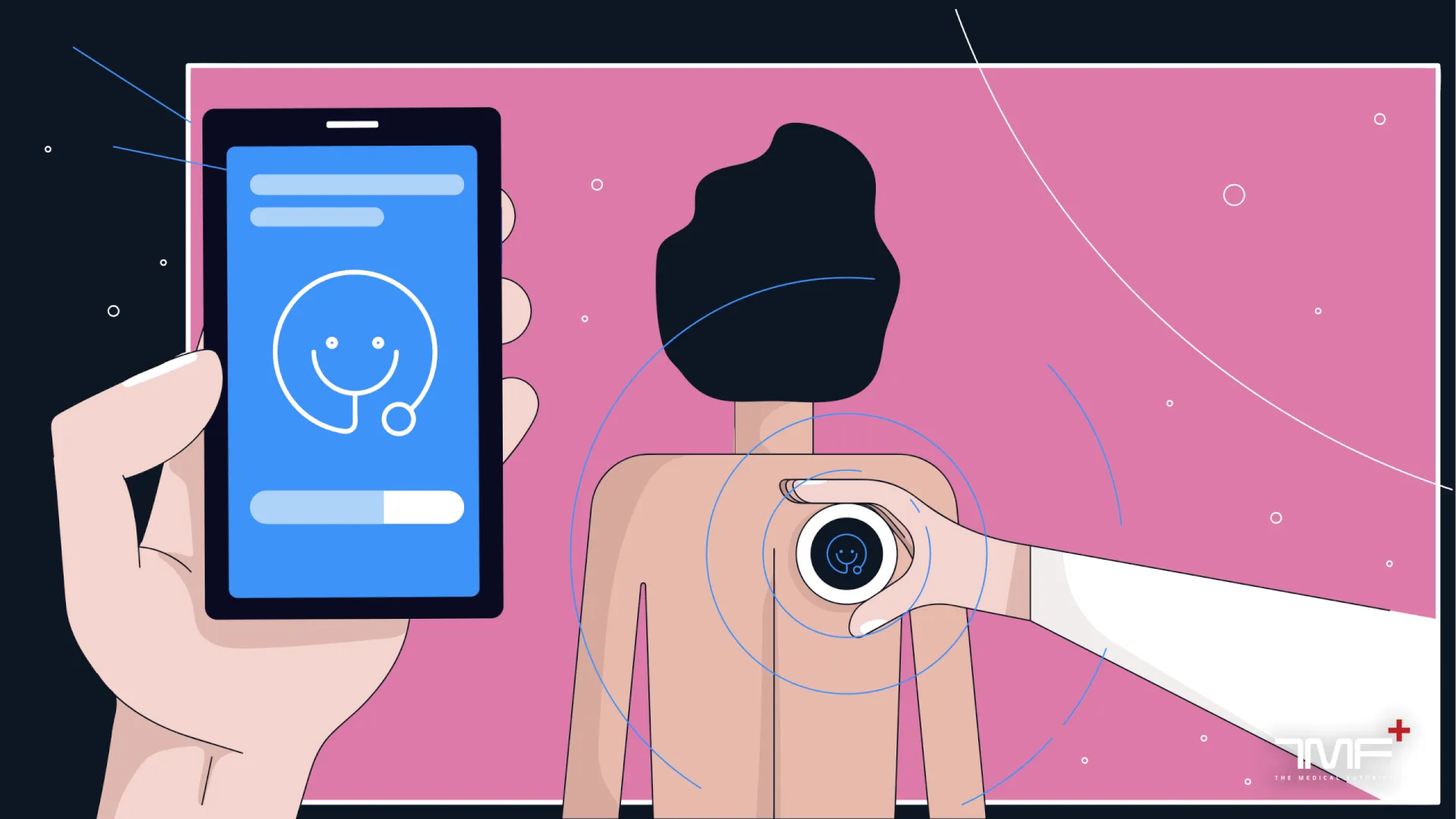
Auscultation is made easy. First, you’ll be asked to set the age of the patient and choose whether you wish to auscultate the heart or lungs. The device automatically connects to the app. The instructions are easy to follow and there’s always a picture to help you with every step. That’s why setting the age of the patient was important during the first step. To make our lives a bit easier, the app shows us a picture of a child around the set age, with the points of auscultation indicated.
You’ll need to follow the animation on the screen and place the device on the skin for it to start recording. You don’t have to push any buttons, the process is fully automatic. Auscultation can stop when the background noise is too loud. This could be a problem, especially with children feeling impatient and irritated.
After the whole process, the app will immediately inform you if the child has abnormal (red) sounds or normal (green) results. The results are automatically analyzed and sent to the platform for doctors and parents to see it in more detail.
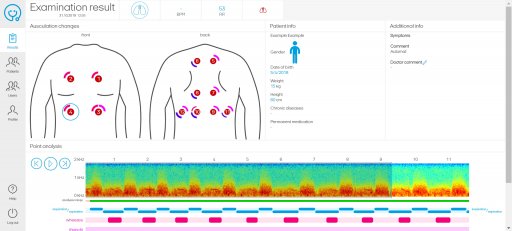
It does not provide you with a diagnosis, but you can share the results with the pediatrician, and in case of abnormal sounds they could ask to see the child in their office, in the ER or to stay at home and look for changes in their condition.
In the more detailed desktop version for doctors, we can also see the diagrams of the recordings, play back the sounds and find more information on the quality of the abnormalities. (StethoMe categorizes these sounds according to the European Respiratory Society’s guidelines as wheezes, fine or coarse crackles, and rhonchi.) On the diagram you’ll be able to see if these happen during inhalation or exhalation.
Changes and innovation do not seem to steer clear of pulmonology either. If a smart stethoscope goes mainstream, doctors would have more time to focus on patients who they really need to see in person. A universal standard in such a subjective examination format as auscultation might lead to patients receiving more precise care.
Stepping stones towards the future
People don’t like change. It is not any different in healthcare. It took plenty of time until the stethoscope, the symbol of healthcare, was accepted by the medical community back in the 19th century. The instrument was invented by French physician René-Théophile-Hyacinthe Laënnec, who published its description in 1819, but it took several decades until doctors actually started using it.
But when it comes to our comfort, fun or just a truly game-changing idea, we find it easier to welcome new inventions into our lives. A home stethoscope backed with A.I. could give parents an ease of mind, save children from an unnecessary trip to the doctor, and assist healthcare providers make the right call (and medical students to learn a bit quicker).
The current situation with AI and neural networks, digital health gadgets and the steady mindset change about telemedicine are all significant stepping stones to a better future. So, let’s hope for a quicker change this time!
|
At The Medical Futurist, we are building a community for making a bold vision about the future of healthcare reality today. If you’d like to support this mission, we invite you to join The Medical Futurist Patreon Community. A community of empowered patients, future-oriented healthcare professionals, concerned health policymakers, sensible health tech developers, and enthusiastic medical students. If there were ever a time to join us, it is now. Every contribution, however big or small, powers our research and sustains our future. Click here to support The Medical Futurist from as little as $3 – it only takes a minute. Thank you. |