6 Potential Medical Use Cases For ChatGPT
Why is everyone talking about ChatGPT and what can this algorithm do for healthcare workers? We found six potential use cases in medicine.

8 min |
Key Takeaways
ChatGPT and similar algorithms are already useful for a variety of tasks in a medical practice, and we provide several examples of how they can be applied.
However, since they are not specifically trained or approved for medical use, certain tasks should not be entrusted to them due to potential life-threatening errors.
In the long term, there will be specialized medical versions of GPT (or similar models) that will assist with even more tasks, and we present examples of these future applications as well.
This article was originally published in December 2022, and updated in May 2024 to include the latest significant developments from the ChatGPT – large language models scene.
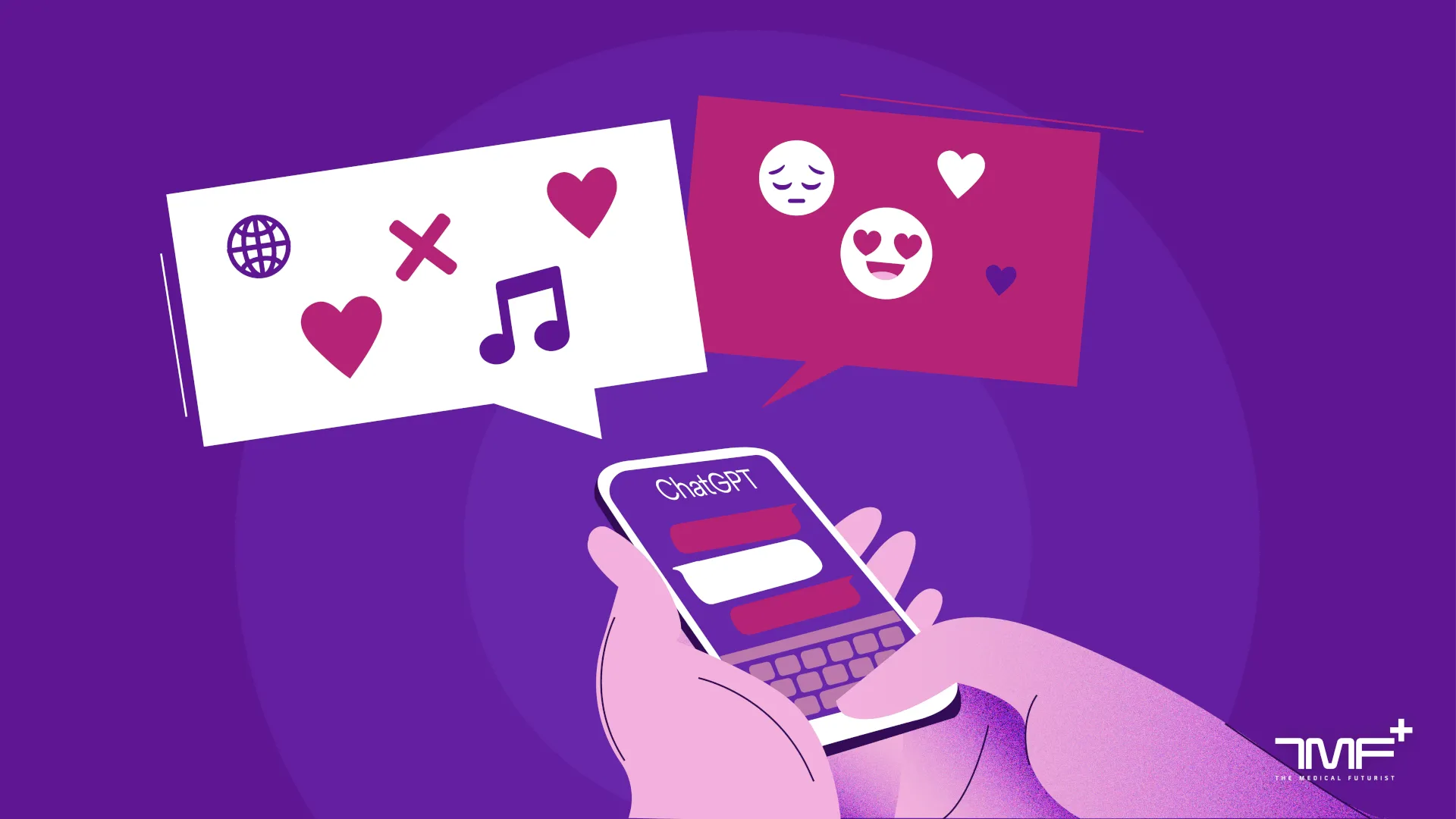
Do you remember, how not so long ago the whole world was buzzing with news on ChatGPT, and how everyone used it to write love poems, homework, summaries of articles, or Python codes? It was a huge hit when ChatGPT became accessible to the public, bringing the vague promise (and understanding) of AI suddenly within arm’s reach to all of us. Although it was barely over a year ago, now it seems to be in a distant past, and we are preoccupied with ChatGPT’s latest iteration, GPT-4o.
“O” stands for “Omni”, meaning that the model accepts multiple types of input (text, audio, image, and video), and can also generate its response in multiple formats. It is also fast, the response time is similar to average human response times in a conversation.
Since the appearance of these easy-to-use AI chatbots (let’s not forget Google’s Gemini and Med-Gemini just to mention another contender), there has been a lot of discussion regarding their potential use in medicine, so let’s see what you can expect from them and what you should not use them for – at least in their current form.
Unlike the text-to-image tool Midjourney, which we introduced earlier, and which is a GAN (generative adversarial network, explained here) algorithm, ChatGPT is a different kind of algorithm – although there is a lot of misinformation about it if you google the topic. So for the seasoned readers: ChatGPT is a transformer, and the acronym GPT stands for Generative Pretrained Transformer. We wrote about an overview of generative AI here.
Anyways, considered the best-in-class at the moment (as of hallucination-rates leaderboard data from 14th May 2024), it can be used for a wide range of things, but it has some limitations.
Starting with the no-gos
In general, it is important to note that I would certainly not use it in any way that could potentially harm patients, like finding a diagnosis, where the slightest error could have dire consequences.
Like the algorithms we used in this article about AI text generators, most large language models have similar flaws: they can create convincing-looking answers that are not factually correct. Most of these models are improving fast, and more and more often come up with warnings if you ask something too scientific/too specific – but you always need to double-check the results without believing LLMs.
When I first started playing with the first edition of ChatGP, it was prone to come up with fake stuff that looked convincing, just as it came up with three non-existing articles proving the benefits of echocardiograms for Systematic Sclerosis. It looked legit, but if you try to find the referenced articles in the scientific literature, you will find none, as many commenters pointed out. They are just things the algorithm fabricated.
If you, as a doctor, send this letter to the insurance company, and the diagnostic test gets rejected because it cites non-existing literature, you just lose valuable time for your patient. Various models have different “hallucination rates”, some are more easily convinced to go with your whatever-guidance than others. (like “Find studies that explain to the insurance company why my knee bursitis patient would have a better recovery if they had a brain CT.”)
But to be fair with ChatGPT (and most major models) in 2024, they do much better these days. I asked GPT-4o, Gemini and Claude to write about the benefits of organic food over chemotherapy in breast cancer treatment, and all three told me that there seems to be no literature proving the benefits of organic food in cancer treatments, that chemotherapy is a well-established treatment and that I should consult my oncologist. This is a HUGE improvement!
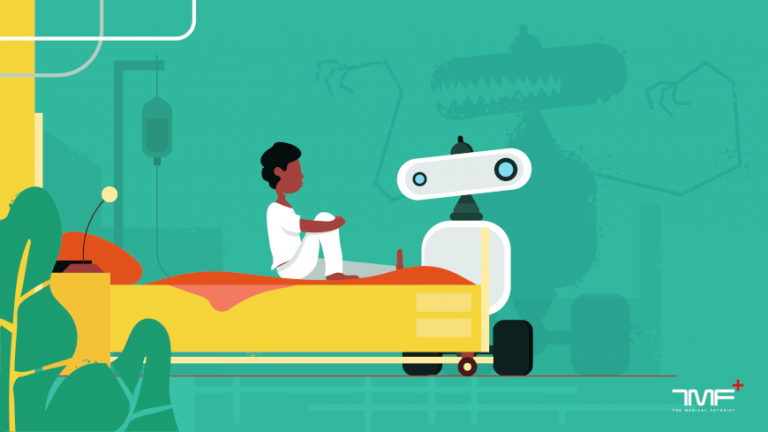
Let’s see the use cases now
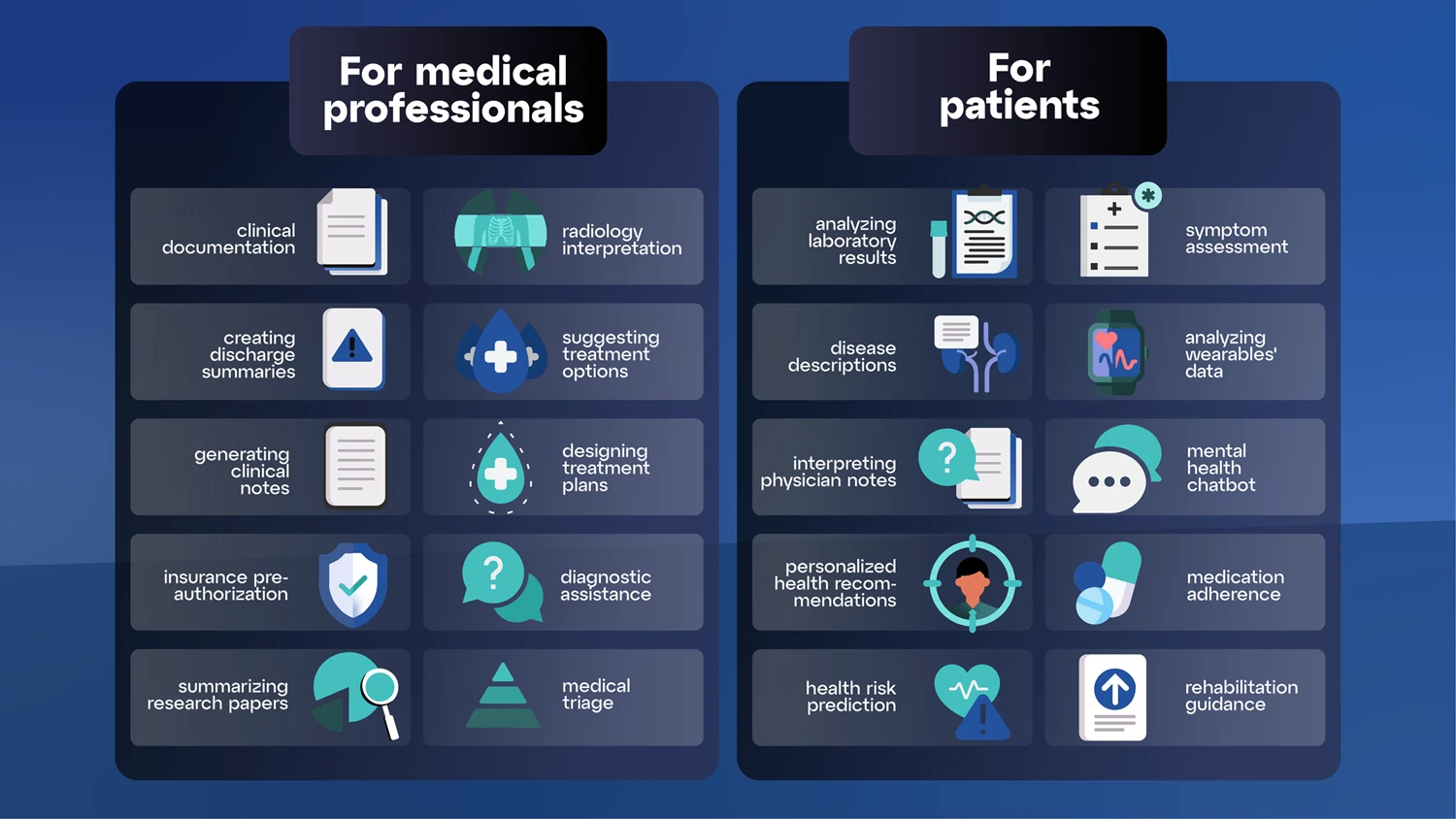
Now that we see the limitations, let’s take a look at the use cases where ChatGPT-like large language models can actually serve healthcare professionals.
1) Summarizing medical records based on patients’ family history, symptoms and lab results, among others
The algorithm does well in interpreting English-language texts, and it does a decent job in providing summaries based on existing medical records.
2) Summarizing and analyzing research papers: list keywords in an abstract or summarize a long and detailed research paper for physicians not working in that field of interest
It can list keywords in an abstract and summarize research papers for physicians. Given access to the full text of an article, ChatGPT can grasp the main points accurately. It can often follow URLs and summarize texts directly from provided links, although we have to note that Gemini does it more reliably – ChatGPT quite often says that it does not have access to the full content on the link.
3) Writing general texts, like emails, a book blurb or anything that saves time and you can further customize it for your needs and personal style
Without a doubt, it does great in such tasks. It writes excellent emails on all kinds of topics (requesting a refund for an item that has been delivered broken, inviting neighbors over to dinner, or suggesting pool resources to buy a nice Christmas gift to the main teacher of the kids). Just like the above, it will do great in general communication with patients.
4) Answer broad questions
ChatGPT does well in answering broad general questions in many areas, from ‘What is diabetes?’ through ‘How to ensure financial safety at an old age?’ to ‘Why are patients not involved in healthcare?’. However, the answers you receive will be very general. You will get a correct summary of the basics, but will most likely not succeed in learning about the specifics.
The algorithm explains well what an artificial pancreas is and how it works, but can’t advise you on specific technical details. Similarly, it gives a great general summary of the goal of my favorite board game, but it can’t answer a simple yes/no question regarding a specific – very obvious – game situation.
5) Work as a chatbot to answer FAQ-like questions for the doctors’ office, or handle appointments
ChatGPT could be also very handy as your chatbot. With 4o, it can handle more complex interactions. Or as the algorithm explained it:
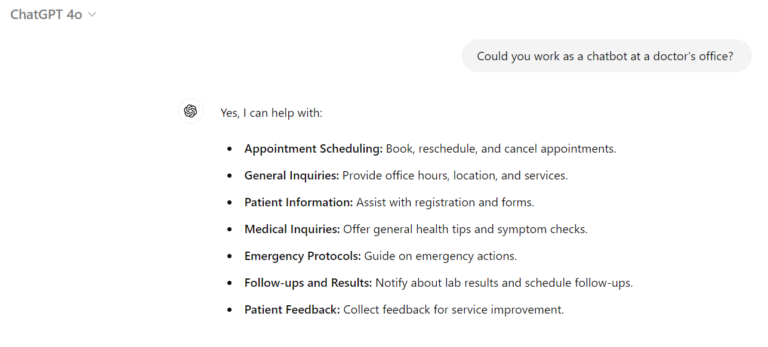
It could be also used to schedule appointments, manage bookings and carry out similar tasks for a surgery or a hospital unit.
6) Have fun with it to build a relationship with AI
Similarly to Midjourney, ChatGPT is also a great tool to get used to working with AI, build a relationship with it, and understand its capabilities and limitations.
Looking forward: longer-term use cases are vast
As said before: ChatGPT currently does not have a version that was specifically trained (and regulated and approved) for medical purposes, neither does Med-Gemini or Med-PaLM2. But eventually, we will have such models, and these will be able to assist in more closely healing-related ways.
For example: in medical education and training, LLMs can enhance the learning process by providing interactive case simulations, personalized study materials, and real-time feedback. This approach fosters a more engaging and effective learning experience for medical students, better preparing them for clinical practice.
For clinical decision support, they can assist healthcare professionals by analyzing patient data and medical literature to suggest diagnoses and treatment options. The ability to quickly process vast amounts of information can help providers make informed decisions, particularly in complex cases, potentially leading to improved patient care.
In mental health support, AI chatbots can offer a safe space for individuals to engage in therapeutic conversations, explore their emotions, and develop coping mechanisms. They can also guide individuals through CBT exercises and provide personalized relaxation techniques, making mental health support more accessible and engaging. In fact, we already see examples of that.
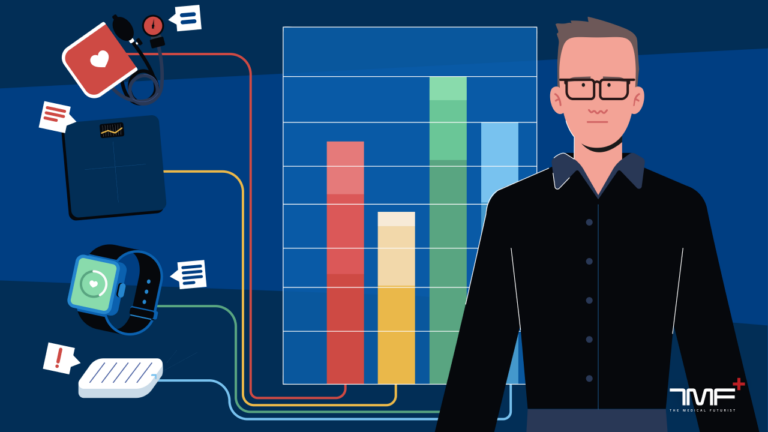
Public health communication could also benefit from ChatGPT’s ability to draft clear and concise messages, suitable for diverse audiences. It can also answer health-related questions in an accessible way and create educational materials for specific populations, to help raising health literacy and informed decision-making.
Artificial intelligence algorithms will arrive in healthcare and all medical specialties, there is no question about it. It will fulfill several roles, and its involvement will vary between different medical fields. But no field will be left untouched, that is certain. Getting used to it before you need to work with it will make this transition easier and more fun.