3 Health Innovations That Would Not Exist Without AI
Artificial intelligence (AI) is making headlines practically every day. Some praise its ability to provide new medical insights, while others point to concerning privacy risks […]

4 min |
Key Takeaways
With the avalanche of AI news, it can be helpful to put into context the importance of the technology.
In this article, we consider some healthcare developments that would not be possible without AI.
Artificial intelligence (AI) is making headlines practically every day. Some praise its ability to provide new medical insights, while others point to concerning privacy risks with the technology in healthcare. The headlines are polarising, to say the least.
While some of AI’s potential has been overhyped for marketing purposes, its importance in healthcare remains undeniable. As such, to put the benefits of AI in healthcare in context, we share three developments that would not be possible without the technology.
1. Drug discovery: solving biological puzzles
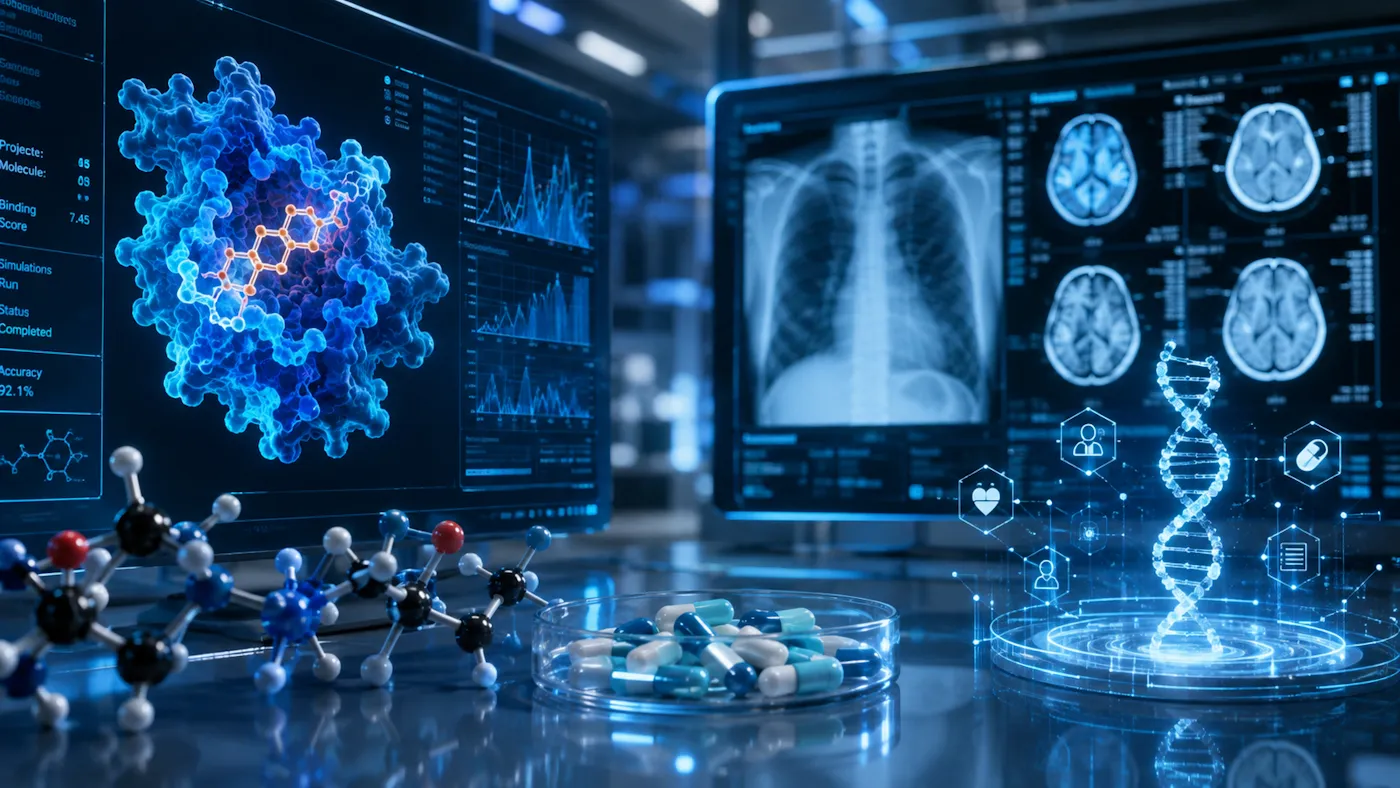
Let’s start with a strong example: some life-saving drugs wouldn’t exist without the help of AI. In particular, the technology has made leaps in the drug discovery process, or the first stage of drug development. This involves identifying a target protein that is associated with a disease, and selecting molecules, which become initial drug candidates, that can bind to and influence the target.
This puzzle-like process is an intensive and time-consuming one that can benefit from the help of AI. Algorithms can be used to predict characteristics of a candidate and whether it will be effective and safe.

This is what drug discovery software developer Schrödinger does. It employs AI models to predict how molecules will behave and the possible outcomes, based on their respective parameters. The company’s tools have been adopted by pharma companies such as Pfizer and AstraZeneca.
Another notable example comes from Google DeepMind’s AlphaFold. This AI model can accurately predict how potential candidates bind to proteins and influence human disease. The achievement was so transformative that its developers were awarded the 2024 Nobel Prize in Chemistry.
Isomorphic Labs, a spinoff of DeepMind, utilises AlphaFold and its own AI models to improve drug design for projects with its pharmaceutical partners. The company plans to start human trials of drugs designed by its AI technology.
2. Medical imaging: a second pair of eyes
Medical imaging represents another area where AI has enabled capabilities that previously did not exist. Clinicians interpret thousands of images every week, often under considerable time constraints. AI systems can assist in the task of identifying subtle abnormalities and flagging suspicious lesions. In fact, radiology is the medical field with the highest number of AI initiatives.
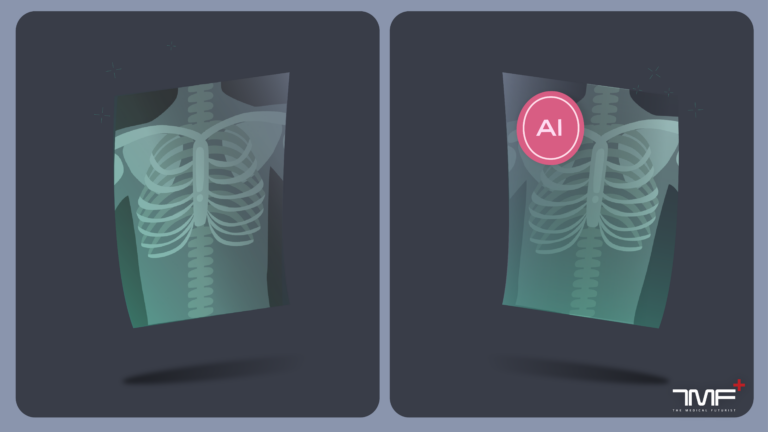
An example of such systems is the FDA-approved IDx-DR. It allows patients to be screened directly within primary care settings, potentially identifying vision-threatening disease much earlier.
The FDA-cleared AI-powered platforms from Viz also provide medical imaging support. They can detect suspected vessel occlusions and risk of stroke in CT scans, thereby alerting specialists to take preventative measures.
Such AI assistance in medical imaging can directly impact patient outcomes. Importantly, these systems do not replace radiologists. They function as intelligent assistants that monitor scans, helping clinicians focus their expertise where it is needed most.
3. Personalised care: a unique healthcare experience
An enduring aspiration for the healthcare field has been personalised care, that is, delivering treatment that is tailored to an individual’s personal needs. However, the sheer complexity of individual biologies has made this prospect unattainable for as long as medical practice has existed. AI has brought this ideal healthcare experience closer to reality.
With their ability to crunch vast amounts of data and mine insights, AI systems can integrate medical data from a range of sources, from genomic analyses to wearable data, to offer tailored insights.
Dutch researchers developed an AI system that provides optimised plans for the radiation of prostate cancer in record time. The AI created better plans and more insight than the doctors thought possible.
In the U.K., Addenbrooke’s Hospital in Cambridge uses Project InnerEye, an AI tool supporting the treatment of cancer patients. The AI analyses hospital data to identify tumours on patient scans and ensures that their treatment plans are tailored to them individually.
While true personalised medicine remains a work in progress, AI has become one of the essential technologies making it feasible.
The real potential of AI in healthcare
While it can be tempting to view every healthcare AI announcement as another revolution, the reality is more nuanced. A lot of these announcements are based on AI systems tested in controlled and limited research settings. Evidence is crucial in implementing such systems, hence the importance of oversight from regulatory bodies such as the FDA.
Despite some concerns over AI taking over the jobs of clinicians and scientists, the real potential of the technology does not lie in replacing them. Instead, it’s in supporting them to explore avenues that would have been practically impossible using conventional methods alone. From designing new drugs to making personalised medicine a reality, AI is beginning to create medical possibilities rather than merely automate existing work.
Written by Dr. Bertalan Meskó & Dr. Pranavsingh Dhunnoo